
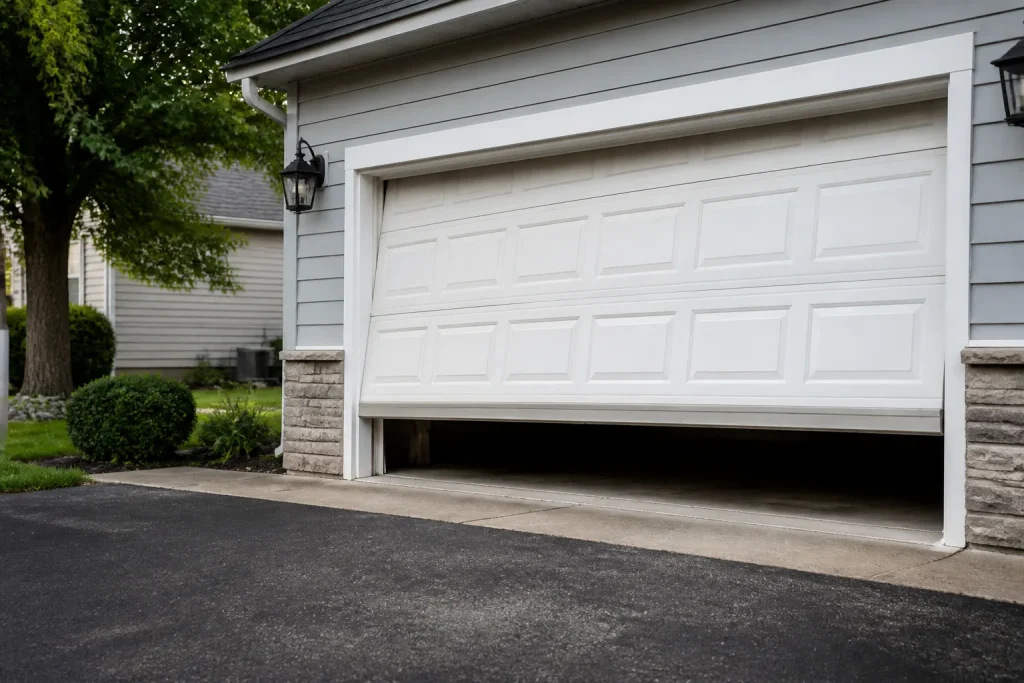
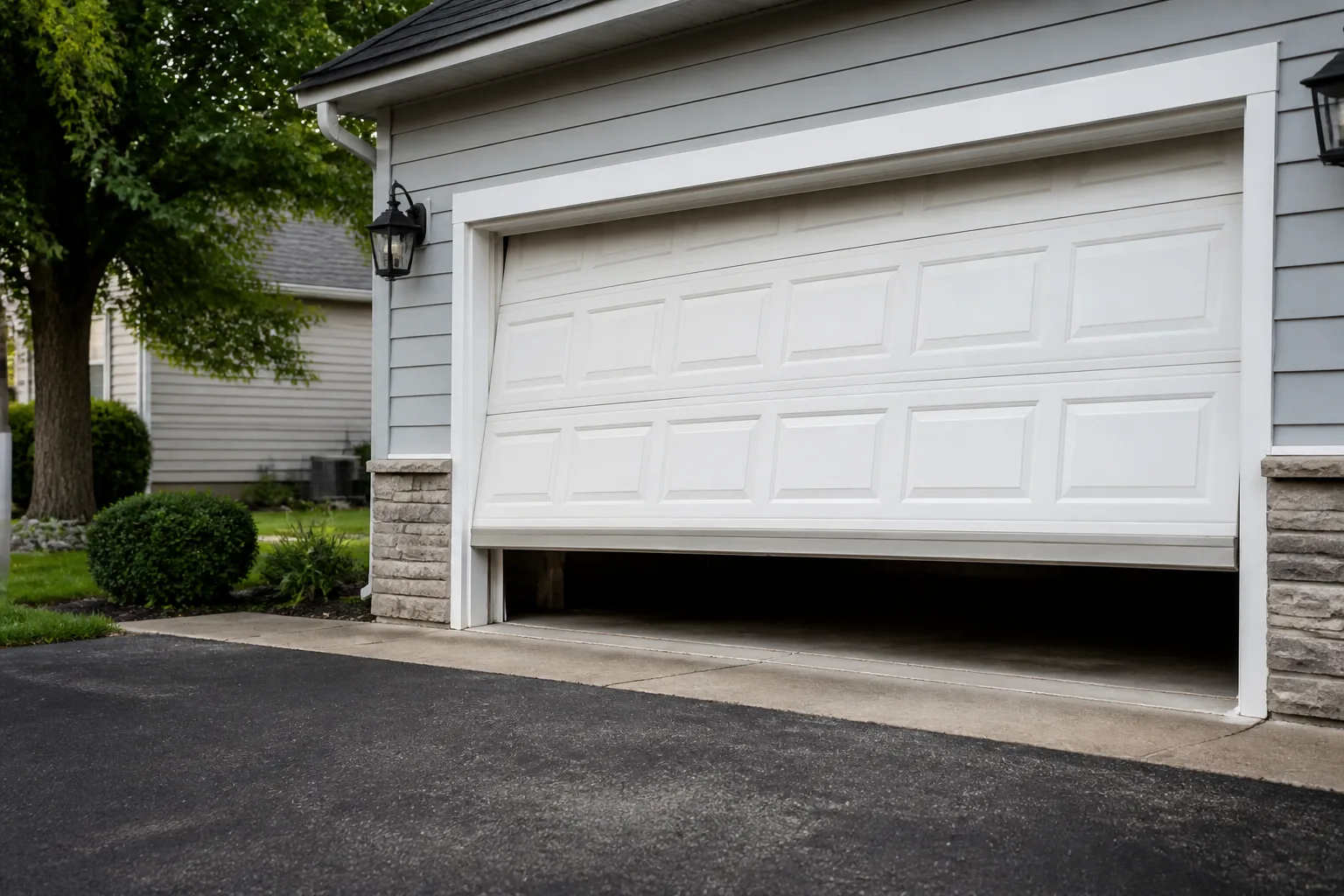
Top Signs You Need Garage Door Service – Don’t Ignore These
Most garage doors announce their problems long before they fail: a new squeak on the way up, a grind near the top of the track, a door that takes a beat longer to close than it did last year. None of these feel urgent. All of them are the cheap repair window before a snapped cable or dead spring turns a small fix into an emergency. Here’s what to listen for and check in Bloomington before that window closes.
Why Garage Door Problems Show Up Quietly First
The door that takes two extra seconds to close than it did six months ago isn’t fine. It’s a cable or spring losing tension a little at a time, and that gradual change has an end date. Garage doors rarely break out of nowhere. Springs, cables, rollers and hinges wear together, and the failure almost always follows months of small signals that get normalized into the background.
That’s the part worth rewriting in your head: a garage door is a system under real tension, and a worn component doesn’t announce itself. It whispers. The door still opens. The door still closes. Maybe it shudders at the halfway point or pauses a half-second before reversing. A Bloomington homeowner drives over that every morning and thinks nothing of it right up to the morning the door stops mid-track and won’t budge.
Treat the early signals as a discount. Catching a worn roller or a stretched spring before it fails usually means a smaller, more predictable repair. Waiting on the same parts until one lets go is how a busy afternoon becomes an evening spent trying to get a dead door shut before the house is left open to the alley.
The Sound-to-Problem Index: What Each Noise Is Telling You
Listen to the door through one full open-and-close cycle and match what you hear to the likely cause. This is the fastest diagnostic a homeowner can run without touching a tool.
- Grinding: Metal-on-metal contact, usually worn rollers or a dry hinge, sometimes the opener’s drive. A grind that tracks a specific point in the cycle points to a roller or hinge at that spot.
- Squeaking: Friction, often from dry hinges, roller bearings or a torsion tube that needs attention. Squeaking is usually the easiest sound to resolve, and the one most ignored.
- Popping: A loud pop under load is a torsion spring that’s about to fail or a cable that has jumped its drum. Stop cycling the door and have it looked at. This one isn’t a sound to ride out.
- Rattling: Loose hardware, a panel bolt working free, or a track the door is no longer riding squarely. A rattle that got louder over a few weeks means something is working itself loose.
One mechanical noise that recurs every cycle is a fact, not a mood. If it changes from a quiet tick to a full pop, that’s the door telling you the window is nearly closed.
The 60-Second Visual Inspection You Can Do in Bloomington
You don’t need to remove covers or climb a ladder. From the floor, in good light, a minute of looking tells you a lot about a door’s health.
- Cables: Look at both cables running down the sides. Frayed strands, a kink, or a cable that’s slack on one side means it’s near failing. Do not test a cable by hand; they’re under tension and can snap without warning.
- Rollers: Worn rollers develop flat spots or a gritty, wobbly feel instead of rolling smooth. Flat-spotted rollers drag the door and strain the opener. Openers from Genie, LiftMaster, Chamberlain and the rest will wear out faster fighting a door that doesn’t roll cleanly.
- Hinges: Check the hinges between panels for hairline cracks, especially around the bolt holes. A cracked hinge flexes and eventually lets a panel sag out of line.
- Panels: A Clopay or Amarr panel that’s cracked, dented or separating from its frame changes how the door balances. Note it even if the door still moves.
A Bloomington door sees real seasonal swing, and the hardware that adjusts best to it is the hardware that’s clean and tight. If anything on the list looks wrong, that’s your cue to get eyes on it before it becomes a stuck door.
The 10-Second Timing Test That Reveals Spring Tension
Run a timing test and write the number down. Time the door going fully up and fully down with a stopwatch or your phone. Do it now, while it’s working, so you have a baseline to compare against later.
On a healthy door the cycle is consistent from one day to the next. What you’re watching for is response-time drift. If the open or close time creeps up by more than about 1.5 seconds compared to your baseline, a spring is likely losing tension or a roller is dragging. A door that gets slower and quieter on the way up is often a torsion spring quietly dying. A door that pulses or hesitates at a certain point is often a roller or track problem.
Springs are the part where we tell people to stop and call. A torsion or extension spring stores serious energy, and a trained technician is the only one who should touch it. When someone in Bloomington wants it handled, we offer garage door spring repair as a dedicated service because a garage spring is one of the most dangerous and most commonly botched do-it-yourself jobs in the house.
When the Door Reverses Unexpectedly: Sensor and Alignment Signals
A door that reverses on its own during closing is doing its job. That reversal is the safety sensor responding to an obstruction, and when it happens with no obstruction in the way, something has drifted.
The likely culprits are misaligned safety sensors, a sensor knocked out of aim, or a door that’s gone out of square so the sensor beam catches it on the way down. Clopay and Amarr sectional doors are heavy enough that a track knocked slightly out of plumb will trigger a reversal on one side. This is also your early-warning system: an unexpected reverse often shows up weeks before the door actually fails to close, because the door is telling you the alignment is moving. Never tape over or bypass a sensor to keep the door closing; fix the cause. A door that won’t reverse on a real obstruction is a safety failure, and the sensor needs to be reset correctly.
If openings and closings were working fine and now reverse for no reason, that’s the point to get it checked. We handle garage door opener repair and can look at the sensors alongside the opener itself, so you’re not guessing whether it’s a sensor, a limit setting or something in the door travel.
The Asymmetry Test for Balance and Load Problems
A balanced door holds position easily. A door carrying a load on one side doesn’t. Here’s the safe way to check.
- Pull the release cord to disconnect the opener from the door, the way you would for a power outage. With the door fully open, the spring is at rest and this step is safe.
- Bring the door down by hand to roughly halfway and let go. A balanced door holds, or drifts only slightly. A door that drops hard on one side, or drifts in one direction every time, has uneven spring tension or a worn roller on one side carrying more load than the other.
Asymmetry is common on doors with two springs. If one spring has picked up more of the load, the door pulls to that side and the whole track starts taking the strain. That’s a spring balance issue, not something to adjust yourself. Reconnect the opener if it feels unsafe at any point, and get a pro to check the springs. Catching it at the halfway point usually means it’s still just a spring adjustment rather than a snapped spring and a bent track.
When to Call a Pro
Here’s the honest dividing line. Noises, visual wear and timing drift are things a homeowner can watch for and report. Anything involving springs, cables or the torsion system is where the fan stays. Those parts store enough force to injure someone who guesses wrong, and “I’ll just tighten it” is how people get hurt. If a pop, a frayed cable or a hard one-sided drop turns up in Bloomington, that’s the moment to get it looked at.
Related services in Bloomington: when you’re ready, we cover garage door repair for the full range of the problems above, from a single noisy roller to a whole door that’s off its track. We work on the brand already in your garage across LiftMaster, Chamberlain, Genie, Clopay, Amarr, Wayne Dalton, Craftsman and Raynor, so the technician on the job knows the hardware in front of them instead of guessing at it. Our technicians have up to 14 years of experience, and the whole point is the right fix, explained clearly, done once.
The Bottom Line
The small sounds and slight behavioral changes are the early signals, and they’re the cheapest moment to act. A door that pauses, grinds, squeaks, reverses oddly or drifts on one side has a real cause, and that cause has a timeline. Catching it before the failure is a repair. Waiting rarely is. If you’ve run the timing test and the visual check and something looks off, or you’d just rather have someone look before it gets worse in Bloomington, we’ll come out and explain what we find.
If you’re in Bloomington and need help, Bloomington Garage Door Repair Co offers free estimates on any job. Call (833) 508-9255. We answer 24/7 with fast dispatch from 7am to 7pm. The estimate is a written price quoted and agreed before any work starts, so you know the number before we touch the door. Our team at Bloomington Garage Door Repair Co handles springs, openers, panels and full installations in one call, and when the door won’t move, we move fast.
Frequently Asked Questions
The first signs are almost always changes you notice hearing or watching: a grind, squeak or pop during the cycle, a door that takes longer to open or close than it used to, or a door that reverses on its own with nothing blocking it. Any one of those is worth a look before it becomes a stuck door. Call (833) 508-9255 if you want someone to check it.
A popping sound under load usually means a torsion spring is about to fail or a cable has jumped its drum, and it’s the sound that most deserves a same-day call rather than a wait-and-see. Stop cycling the door and have it checked. Call (833) 508-9255 for an assessment.
You can safely lubricate hinges, rollers and the track with a proper garage door lubricant, but lubrication only quiets friction. It won’t fix a frayed cable, a stretched spring or a door that’s gone out of balance. If the noise is coming from the spring or a cable, call a pro. Call (833) 508-9255 for a free estimate.
Disconnect the opener with the release cord while the door is open, bring the door to halfway by hand, and let go. A balanced door holds or drifts only slightly. A door that drops hard on one side or drifts in the same direction every time is off balance, which usually points to uneven spring tension. Have spring issues checked by a trained technician. Call (833) 508-9255 for a free estimate.
Written by the team at Bloomington Garage Door Repair Co.
Need Garage Door Help?
Call Bloomington Garage Door Repair Co - the local pro we connect you with is licensed and insured, here with fast help in Bloomington.
(833) 508-9255