
Last updated November 21, 2026
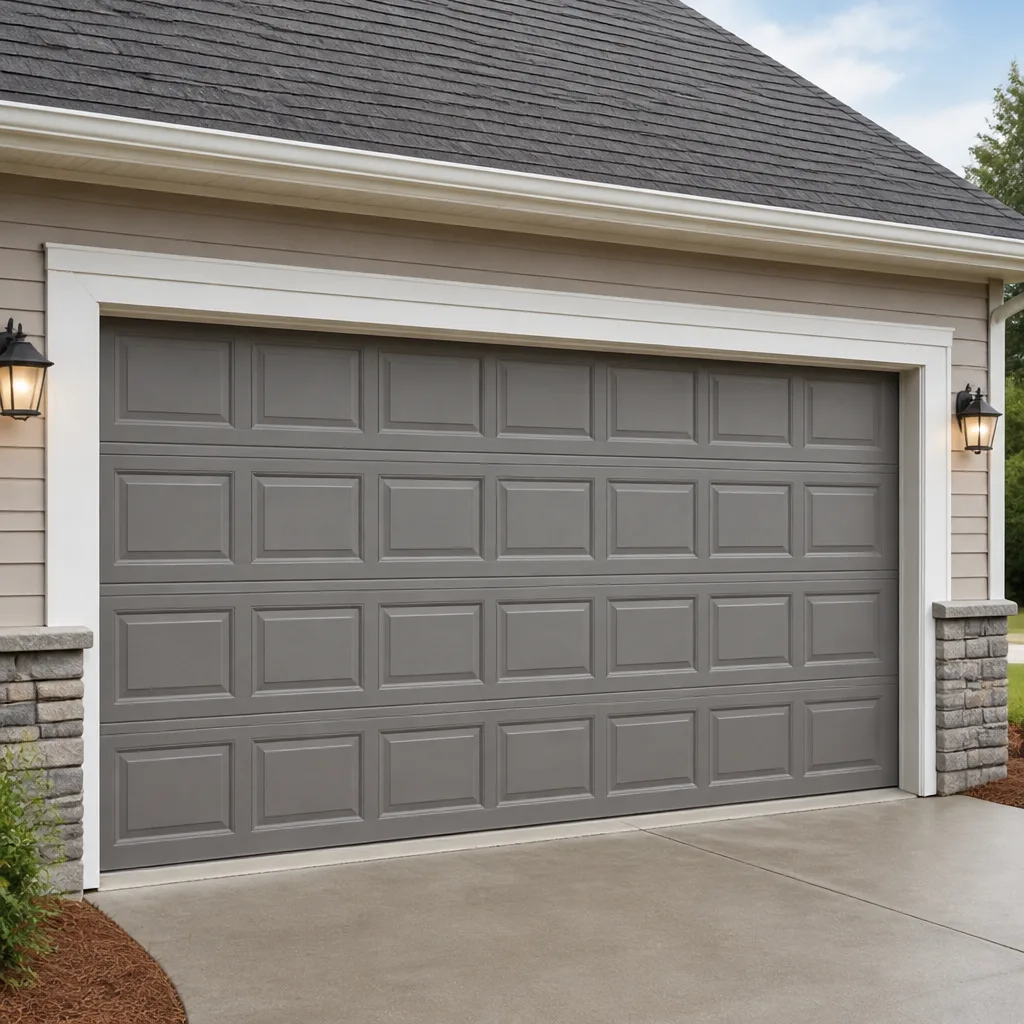 Raised-panel steel
 Carriage house
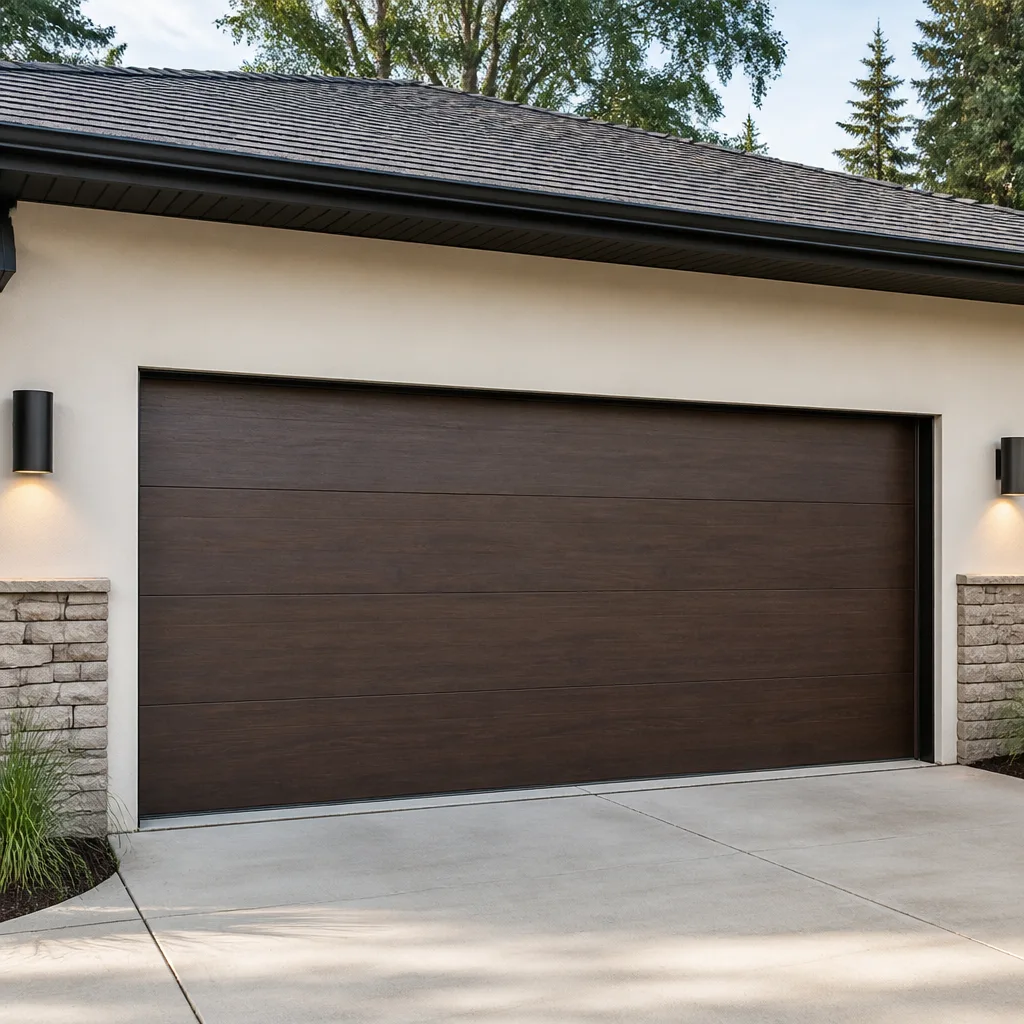 Modern flush
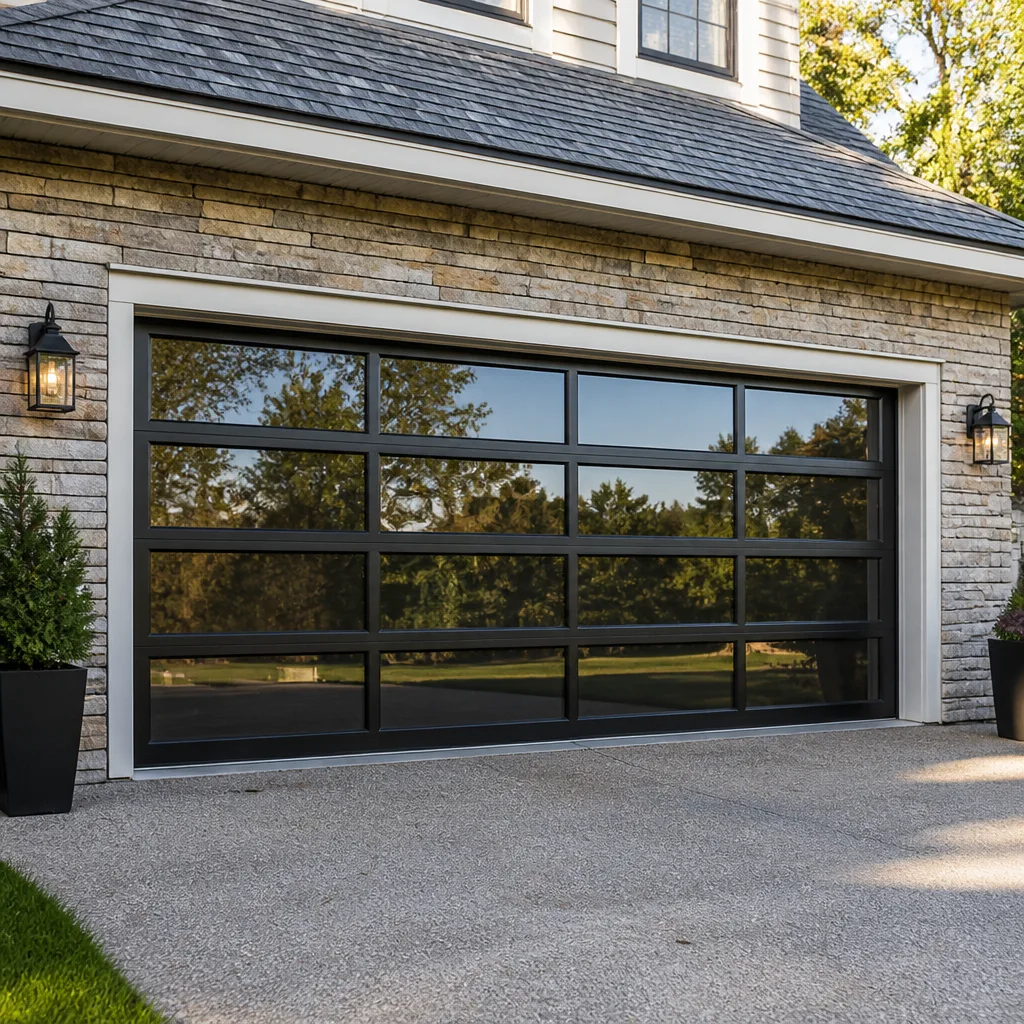 Full-view glass
 LiftMaster openers
 Chamberlain openers
Full 25-point door and opener safety check with every visit - springs, cables, rollers, tracks, and your LiftMaster or Chamberlain opener included
You get a price before we start. It does not change when the pro arrives.
Get your free estimateGarage Door Warning Signs: A Bloomington Homeowner’s Reference Guide
Most garage door warning sign guides tell you to watch for a door that won’t open. By the time that happens, you already have a problem on your hands, a car stuck inside, or a house left open. The signals that actually save you money are quieter: a door that hesitates half a second before it moves, a faint ticking at the end of a cycle, a gap of an inch along one corner of the floor. Bloomington homeowners notice these things months before a failure and usually shrug them off. This guide is about catching those early signals while they are still cheap to fix.
Quick Answer
The earliest garage door warning signs are a brief hesitation at the start of travel, a grinding or ticking sound that wasn’t there before, uneven gaps between the door and the floor, and a door that reverses on its own during cold snaps. These usually point to spring fatigue, worn rollers, or a sensor knocked out of line, and all three are easier to correct before they cause a full failure. In Bloomington, the freeze-thaw swings of winter make spring fatigue and sensor drift the two most common early issues we see.
Styles & brands we work with
- Raised-panel steel
- Carriage house
- Modern flush
- Full-view glass
- LiftMaster openers
- Chamberlain openers
Table of Contents
- The Half-Second Hesitation: Your First Real Warning
- What the Sound Tells You: Lubricate, Repair, or Stop
- Uneven Gaps Along the Floor: Springs vs. Frame
- Why Your Door Reverses in Cold Weather
- The 10-Second Torsion Spring Check
- How to Track Symptoms So a Technician Diagnoses Fast
- Bloomington Winters and What They Do to Your Door
- When a Warning Becomes an Emergency
The Half-Second Hesitation: Your First Real Warning
A garage door that pauses for half a second before it moves is not warming up. It is showing early spring fatigue. On a torsion spring system, the spring holds the door’s weight in tension; when the spring loses a small amount of its lift, the opener has to work harder at the very start of the cycle. That extra strain shows up as a hesitation, a slight jump, or a louder first second of travel.
In Bloomington, this shows up most in the weeks after a hard cold stretch. A spring that felt fine in October can feel sluggish by January. Left alone, the hesitation grows. Within weeks a door that hesitated can stop partway up, and a door that stops partway up often announces a broken spring.
What to watch for:
- A short pause before the door starts moving up or down
- A small jump or lurch in the first second of travel
- The door slowing noticeably as it approaches fully open
- A door that feels heavier when you lift it by hand (only test with the opener disconnected and the door fully closed, and never put your hands near the springs or cables)
If you notice the hesitation, do not wait for the failure. This is the exact window where garage door spring repair is a straightforward fix instead of an emergency. Our technicians have up to 14 years of experience reading this exact signal on the brands installed across Bloomington homes, including LiftMaster, Chamberlain, and Genie systems paired with Raynor or Clopay doors.
What the Sound Tells You: Lubricate, Repair, or Stop
Garage doors talk. The trick is knowing which sounds mean “spray some lubricant” and which mean “stop using this door.” Here is how we sort them.
Lubricate Now
A light squeak or a dry groan as the door moves is usually friction at the rollers, hinges, or the torsion bar bearings. This is the “maintain it” sound. A little garage door lubricant on the rollers and hinges once or twice a year keeps it quiet and reduces strain on the opener.
Repair Soon
A rhythmic ticking, a rattle that wasn’t there last month, or a scraping sound at one point in the track points to a worn roller, a loose hinge, or a track that has shifted slightly out of alignment. These are fixable, but they wear the door and the opener faster the longer you leave them. Book a repair within a few weeks.
Stop Using the Door
A loud bang or snap from above the door, followed by the door hanging or refusing to lift, means a spring or cable has failed. A grinding that comes from the opener itself can mean a stripped gear. Stop running the door and call for service. When the door won’t move, we move fast.
Our technicians sort these sounds by brand and by hardware, so a diagnosis on a Craftsman opener is not the same as a diagnosis on a LiftMaster. If the sound is coming from the motor unit, garage door opener repair is usually the right call. If it comes from the door itself, the problem is more likely in the springs, rollers, or tracks.
Uneven Gaps Along the Floor: Springs vs. Frame
Get down at floor level and look across the bottom of your closed door. The gap should be even and small. An uneven gap, one side touching and the other floating an inch above the floor, tells you something specific.
If the gap is even at the bottom but the door sags in the middle
This usually means the springs are no longer balancing the door evenly. One spring in a matched pair has lost more tension than the other. Over time that imbalance puts twisting force on the panels and the tracks. This is a spring issue, and it is the more urgent of the two.
If the gap is uneven and the door looks tilted in the opening
This can come from a frame that has settled, a track out of plumb, or a hinge pulling loose. Bloomington’s soil shifts with each freeze and thaw, and older homes near the Nine Mile Creek corridor often show this after a hard winter. It is usually a slower problem, but it should be corrected so the door seals and so the opener is not fighting a misaligned door.
If the gap is even all around but wider than it used to be
Your bottom seal has flattened. A worn seal lets cold air, snow, and pests into the garage. Replacing the seal is inexpensive and extends the door’s life.
The quick check
- Close the door fully.
- Crouch at the center and look at where the door meets the floor.
- Repeat at each corner.
- Note any corner that is off by more than a quarter inch.
Any door that seals unevenly is a good reason to book garage door repair. The fix differs depending on whether the cause is the springs, the frame, or the tracks.
Why Your Door Reverses in Cold Weather
When a garage door goes up and then reverses on its own before it closes, homeowners often assume the opener is failing. In Bloomington winters, the more likely cause is sensor misalignment from frost shift. The safety sensors sit a few inches off the floor on either side of the door. As the ground freezes, thaws, and re-freezes, the small posts or brackets holding them can shift a fraction of an inch. That is enough to break the invisible beam between them, and the door treats a broken beam as an obstacle.
What to check:
- Look at each sensor lens. It should glow steadily, not blink. A blinking light is a signal the sensor is not “seeing” the other side.
- Look for dust, cobwebs, or a snow crust on the lens. A quick wipe with a dry cloth fixes a surprising number of these.
- Look at whether the two sensors face each other squarely. If one looks tilted, that tilt is the problem.
- Check the path between them. A stored box, a bike, or a bag of salt can block the beam and mimic a sensor failure.
If the lenses are clean, aligned, and the path is clear, and the door still reverses, the issue is more likely inside the opener’s logic or travel limits. That is where a proper diagnosis matters. On a Genie or Chamberlain unit, the adjustment procedure is different, and guessing can make the door unsafe. Leave the adjustment to a technician rather than dialing the limits yourself, and never run the door with the sensors blocked “just to test it.”
The 10-Second Torsion Spring Check
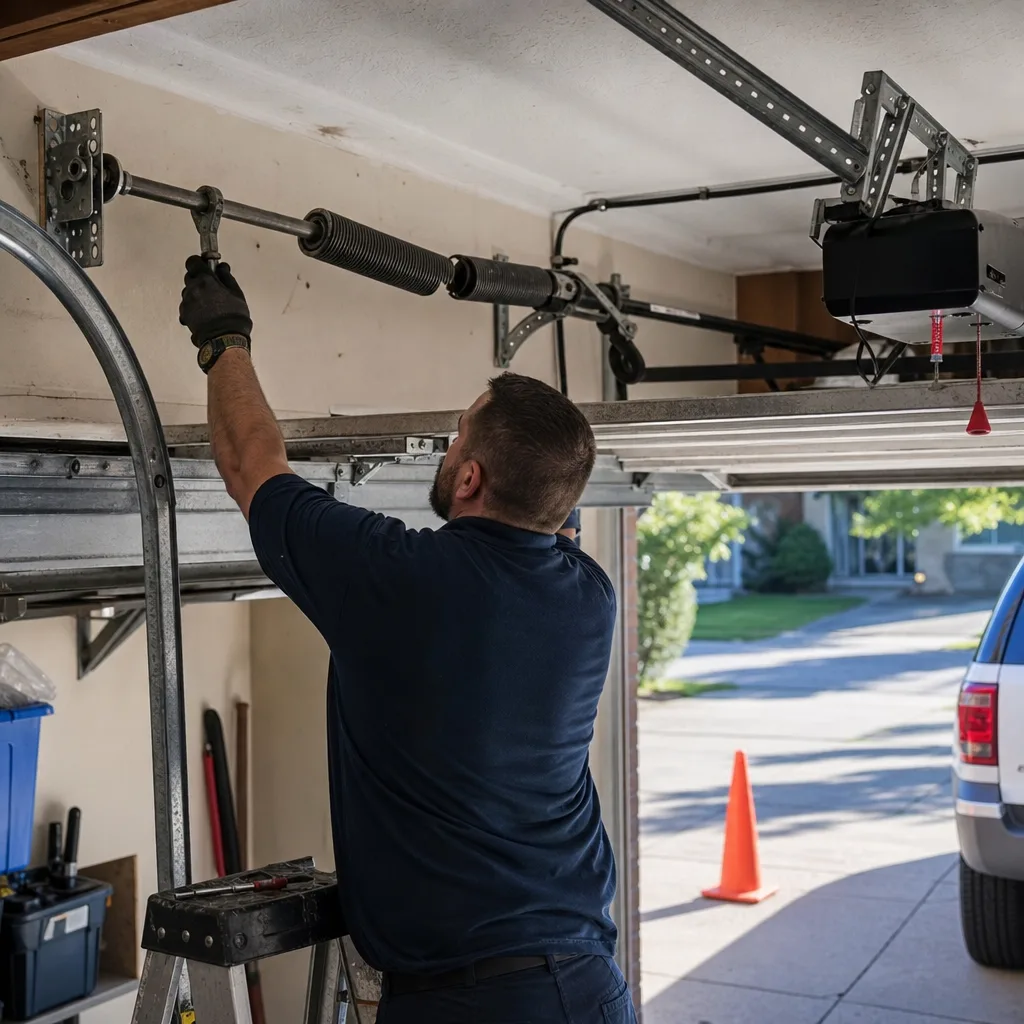
The torsion spring is the coiled steel bar mounted on the wall above the door. A visible gap in it means the spring has broken. You can check for a gap from the floor in about 10 seconds, without touching anything.
What to look at:
- Stand on the floor at least six feet back.
- Look at the torsion bar above the door, where the coiled spring wraps around it.
- Look for a visible gap in the coil. A spring with a break looks like two separate coils with space between them, usually near the end.
- Look at the coil’s surface. A winding that looks stretched or uneven compared to a neighbor’s door is a sign of fatigue.
- Never touch the spring, the cables, or the torsion bar, and never try to wind or unwind it. The torsion spring holds stored tension that can cause serious injury in an instant.
If you see a gap, do not run the door. Call for service. A broken torsion spring on a typical Bloomington door is one of the most dangerous DIY repairs a homeowner can attempt, and it is the repair we recommend leaving entirely to trained hands. If the spring looks fine but the door is hesitating or noisy, an inspection is still worth it, because early spring fatigue does not always show as a visible gap. Our team handles this check as part of a routine service call, and we work on the system already in your garage, whether that’s a Raynor torsion setup or a Wayne Dalton TorqueMaster arrangement.
How to Track Symptoms So a Technician Diagnoses Fast
One of the most useful things a homeowner can do is write things down. A technician who arrives with a clear history can often skip a diagnostic step, which saves you time and money. This is the habit that turns a vague “it’s been acting up” into a fix that lands the first time.
What to record:
- The date you first noticed the symptom.
- Whether the symptom shows up on opening, closing, or both.
- The outdoor temperature when it happens. Bloomington winters make this the single most useful entry.
- Whether it happens every time or intermittently.
- Any loud sound, and where it comes from (wall, ceiling, floor, or the opener unit itself).
- Any change after you cleaned or lubricated the door.
A simple note in a phone app or a sheet of paper on the wall of the garage works. When you call, read from that note. It tells us the difference between an intermittent sensor issue and a failing spring before we arrive.
What the technician will want to know
- Has the door ever been left open overnight?
- Has anything hit the door in the last few months?
- Has the door been painted, insulated, or had panels replaced?
- Is the opener the original one, or has it been replaced?
- Do you remember the brand and model? (If not, a photo of the opener label saves a step.)
When you call Bloomington Garage Door Repair Co, this kind of detail goes straight to the technician who will handle the job. That is the whole point of working with a single-trade garage door specialist instead of a general handyman service. We cover spring repair, opener repair, hardware replacement, and full installations in one place, so the person who answers your call understands the whole picture.
Bloomington Winters and What They Do to Your Door
Bloomington winters are hard on garage doors, but not for the reason most people think. The cold itself is fine. It is the freeze-thaw cycle that does the damage. Every time the temperature drops below freezing and comes back above it, the ground under your garage slab shifts a little. That motion is small, but over a season it can knock a sensor out of alignment, loosen a hinge, and pull a track slightly out of plumb.
Three things to check every fall, before the first hard freeze:
- Lubricate the rollers, hinges, and torsion bar bearings once.
- Test the safety reverse. Place a piece of wood on the floor under the door and lower it; the door should reverse when it touches the wood. If it doesn’t, stop using the door and call for service.
- Confirm the opener’s auto-reverse and force settings have not been adjusted to compensate for a heavier-feeling door. A heavier door is a spring signal, not a force-setting problem.
Snow and ice crust on the bottom seal can also cause a door to close on an apparent obstacle and reverse. Clear the threshold after a snow event before running the door. A door that reverses only after snow has accumulated under it is doing exactly what it should.
When a Warning Becomes an Emergency
Some warning signs give you time. Others do not. Here is where we draw the line.
- Broken spring or snapped cable: stop using the door and arrange service. Do not try to force it up.
- Door stuck open with the house exposed: treat as urgent. Call for emergency service.
- Door stuck closed with the car trapped inside: urgent. Call for emergency service.
- Opener makes a grinding noise and won’t lift the door: urgent. Stop running the motor.
- Door off its tracks: stop, do not attempt to guide it back, and call for service. A door that has left its tracks can fall.
- A single loud pop, then a door that won’t move: likely a broken spring. Stop and call.
For time-sensitive failures, emergency garage door service is part of what we do. We answer 24/7, and fast dispatch runs from 7am to 7pm, Sunday through Friday. A call outside dispatch hours is booked into the next opening, and same-day service is often possible for urgent repairs. We do not promise same-day on new-door installations, since those are measured, ordered, and scheduled, but for a snapped spring or a stuck door, speed matters.
If you are not sure whether your situation counts as an emergency, call anyway. We will tell you honestly whether it can wait until the next day, or whether it needs attention now.
Common Mistakes to Avoid
- Assuming the door is “warming up.” That half-second hesitation is a signal, not a quirk. Waiting through a Bloomington cold snap is how a spring job becomes an emergency repair.
- Turning up the opener’s force setting to push through the hesitation. This tells the opener to ignore a real problem with the springs. It masks the symptom and wears the opener faster.
- Spraying the torsion spring with lubricant and calling it maintenance. The spring is not the thing that squeaks. Lubricate the rollers, hinges, and bearings instead, and leave the spring itself alone.
- Ignoring a small gap along the floor. An uneven gap signals a balance problem that puts twisting force on the panels and tracks.
- Blocking the sensor “just to test it.” Running the door with the sensor beam blocked defeats the safety system and risks injury. Test the reverse function with the manufacturer’s recommended method, not by defeating the sensor.
- Treating a reversing door as a bad opener. In Bloomington winters, the cause is usually sensor alignment after a frost shift, not the opener.
- Calling three different contractors for one problem. A garage door system’s parts are connected: springs, opener, tracks, and panels all talk to each other. One specialist who handles the whole system diagnoses faster and avoids overlapping repairs. garage door repair through a single-trade specialist is usually cheaper in the long run than piecemeal fixes.
- Not writing anything down. A vague description of “it’s been acting up” costs the technician time, and it costs you an extra diagnostic step. Log the date, temperature, and sound.
See the difference
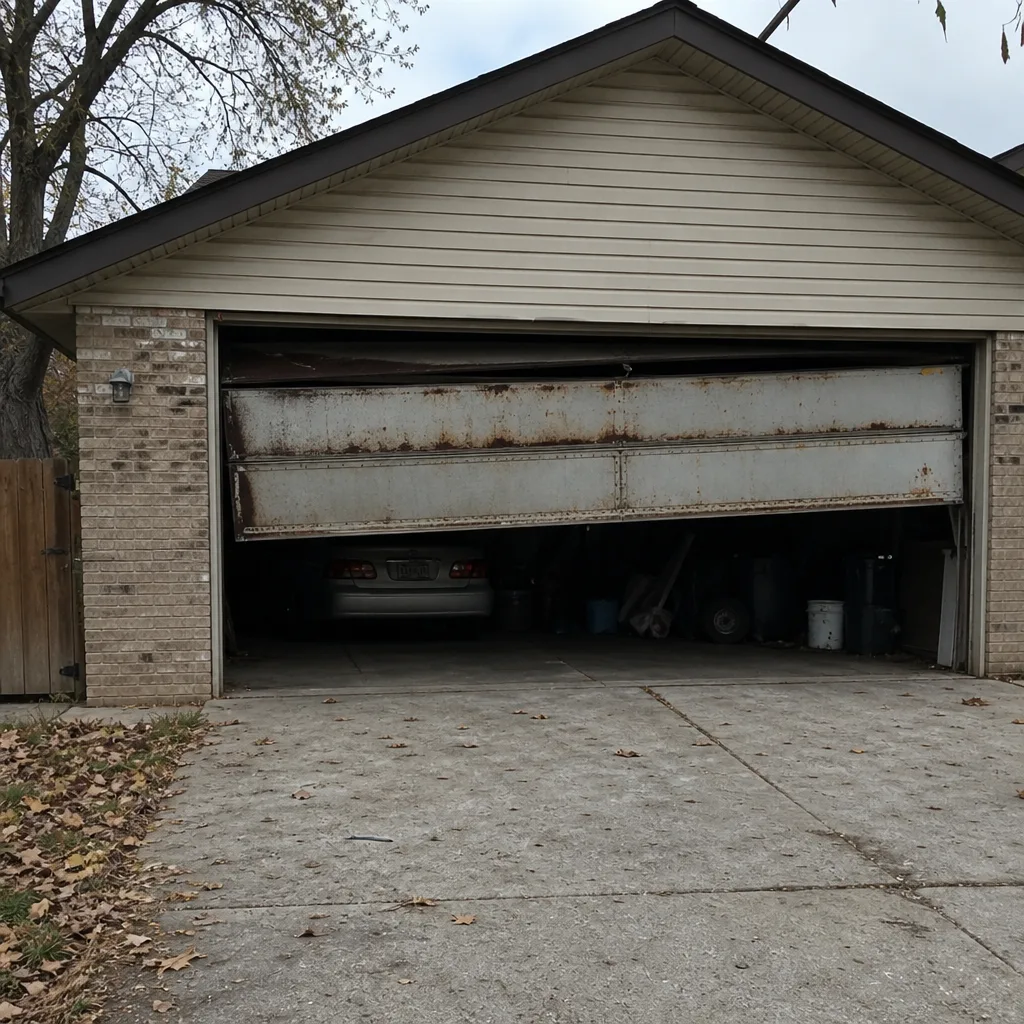 Before
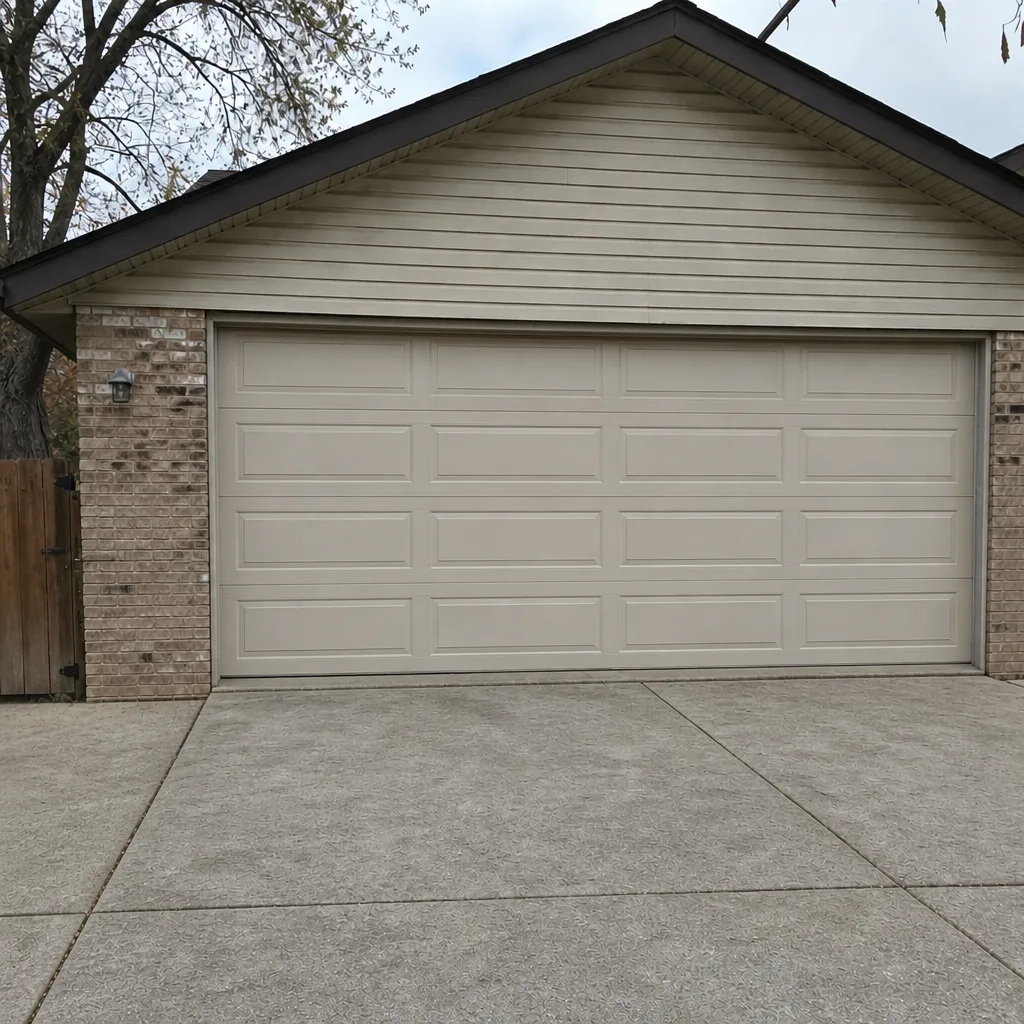 After
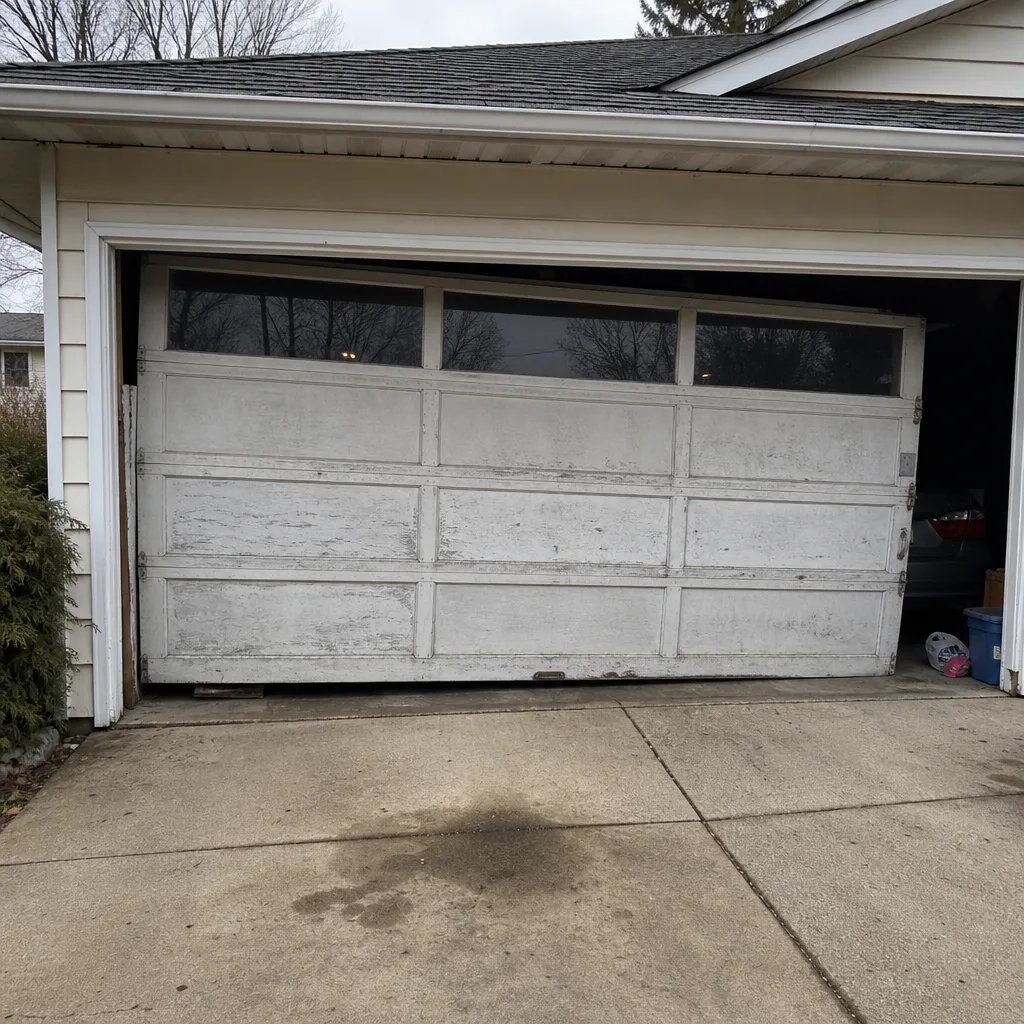 Before
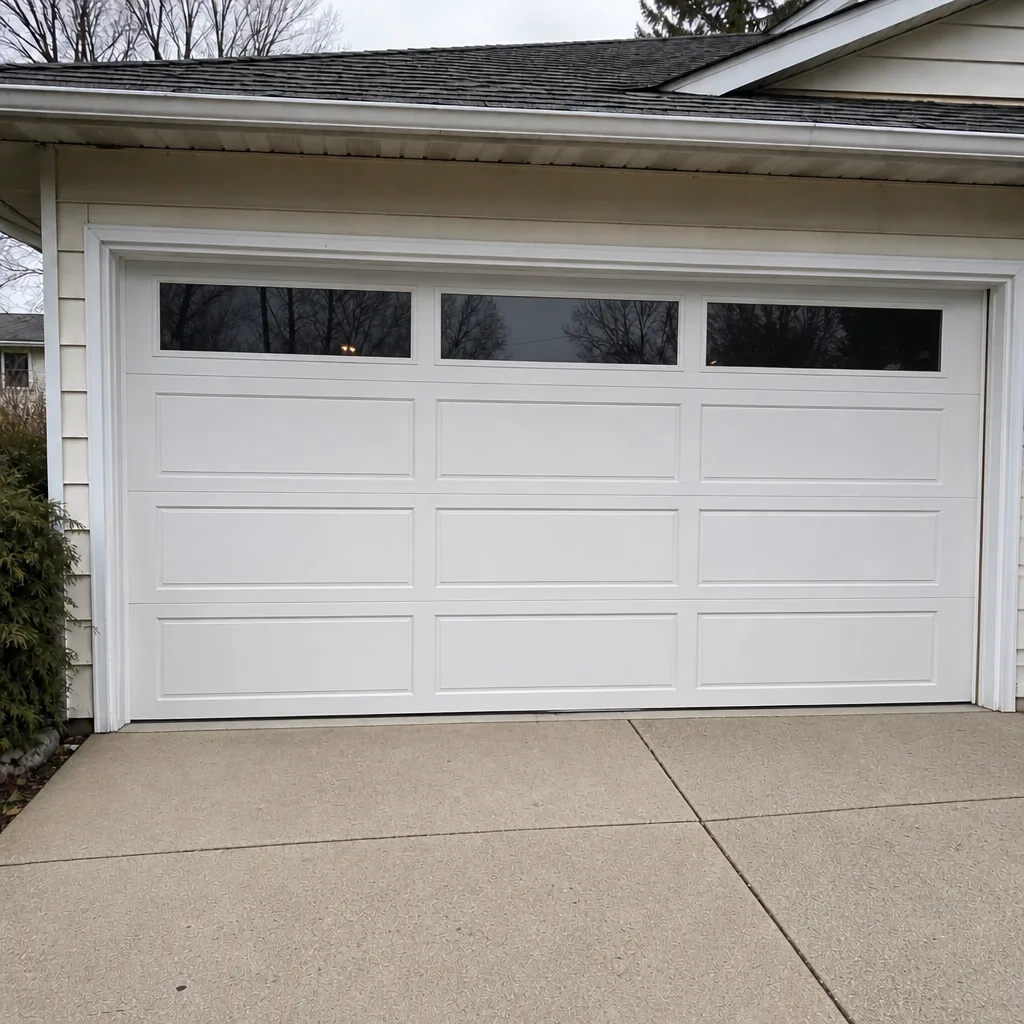 After
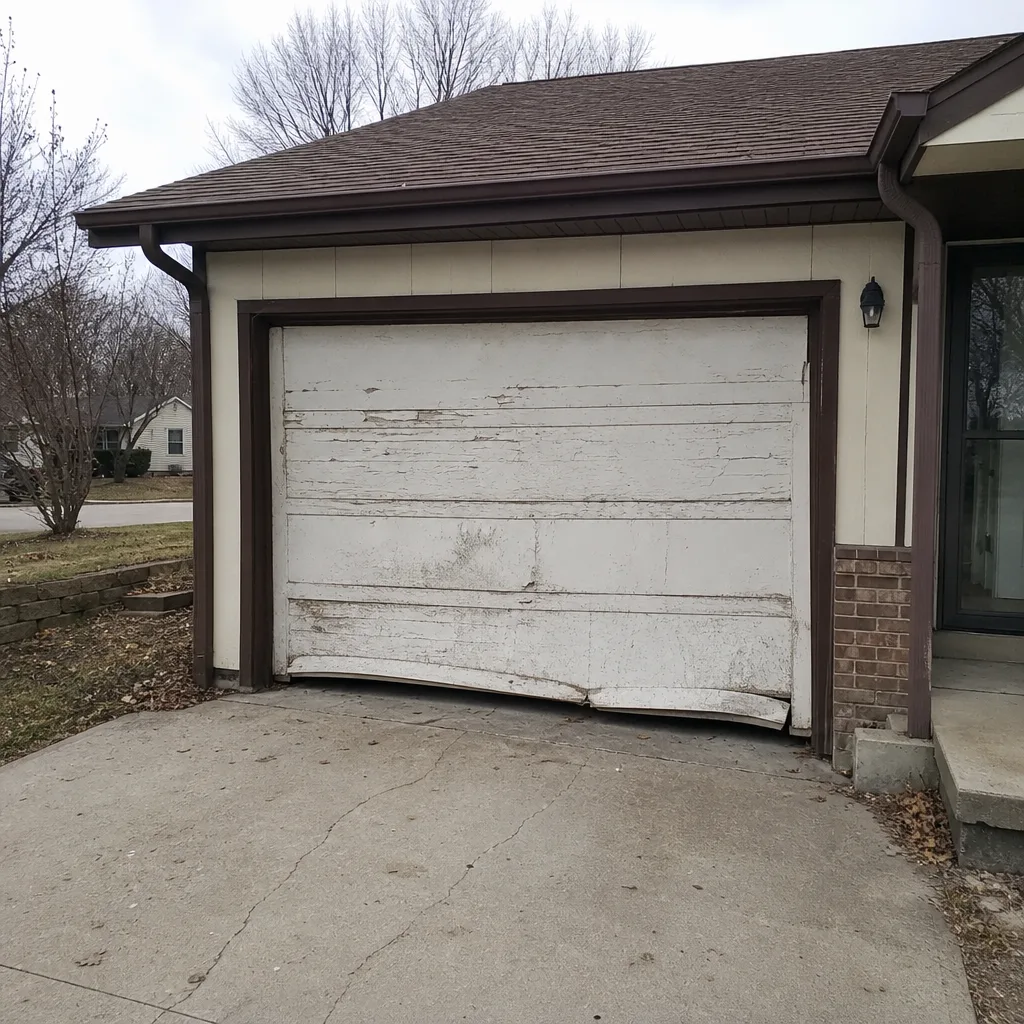 Before
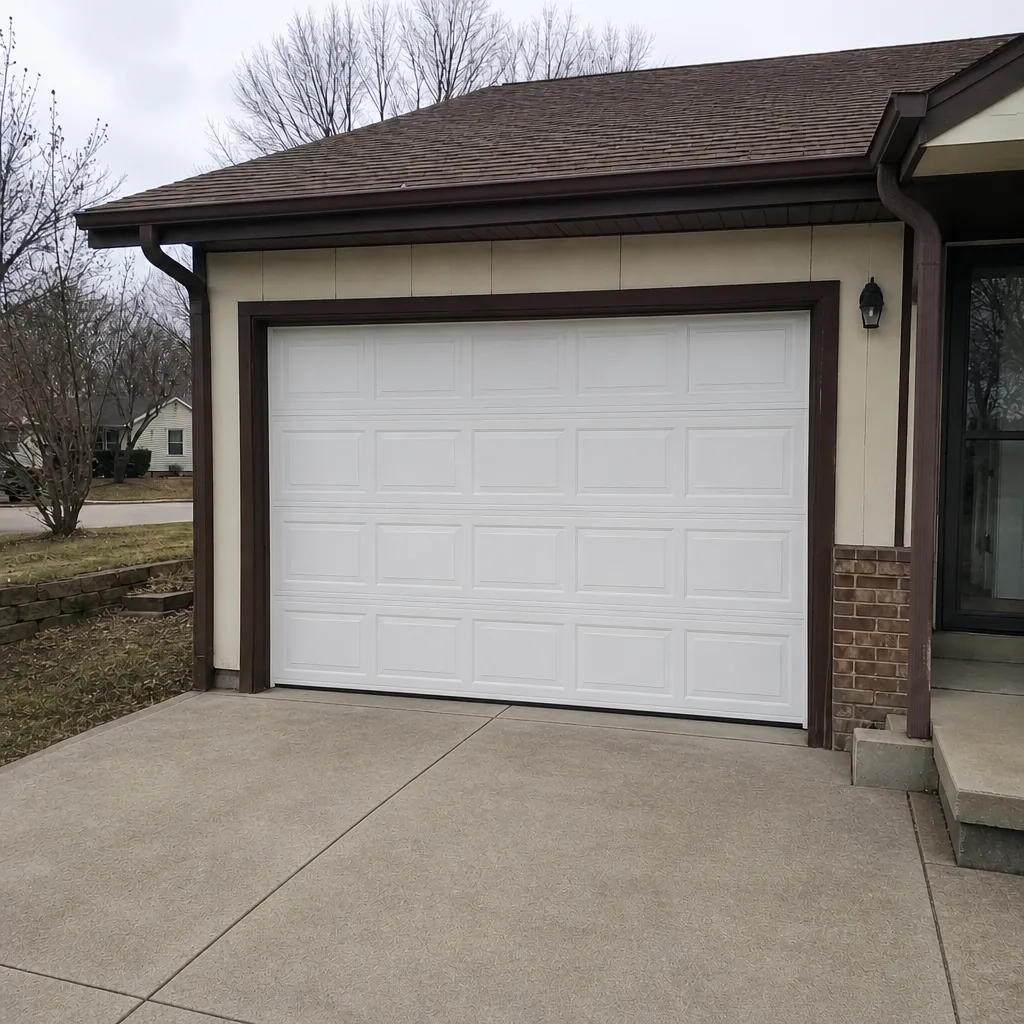 After
When to Call a Professional
Call a professional the moment you see a broken spring, an off-track door, a snapped cable, or an opener that grinds and won’t lift. Those are not warning signs anymore; they are failures, and running the door can make them worse. Call sooner than you think necessary if your door hesitates, if the gap along the floor is uneven, or if the door reverses during cold weather and cleaning the sensor does not fix it.
Bloomington Garage Door Repair Co offers free estimates in Bloomington. We work on the brands already in Bloomington garages, from LiftMaster and Chamberlain openers to Raynor and Clopay doors, and every technician diagnoses the make and model rather than guessing. Whether the fix is a spring, an opener, a hinge, or a set of rollers, the estimate is free and the written estimate sets the price before any work starts.
Call (833) 508-9255. We answer 24/7, and fast dispatch runs from 7am to 7pm, Sunday through Friday.
Frequently Asked Questions
The earliest signs are a brief hesitation before the door moves, a new ticking or grinding sound, an uneven gap along the floor, and a door that reverses on its own in cold weather. Each of these points to a specific, fixable issue: spring fatigue, worn rollers, or sensor misalignment. Catch them early and the repair is usually simple and inexpensive.
Look for a visible gap in the torsion spring above the door, check whether the door feels heavier than usual when lifted by hand (with the opener disconnected and the door fully closed), and listen for a hesitation at the start of travel. A gap in the coil means the spring has already broken; a stretched or uneven coil means it is failing. Never touch the spring or cable yourself. Call (833) 508-9255 for a free estimate, and do not run the door in the meantime.
In Bloomington winters, the most common cause is a safety sensor knocked out of alignment by a frost shift under the garage slab. Check that both sensor lenses glow steadily rather than blinking, wipe them clean, and make sure nothing blocks the beam. If the door still reverses after that, the issue is likely in the opener’s travel limits, and a technician should adjust it. Call (833) 508-9255 for a diagnosis; estimates are free.
Yes, with the door closed and the opener disconnected, and using a garage door lubricant, not a household spray. Lubricate the rollers, hinges, and torsion bar bearings, but leave the torsion spring itself alone. A spring that squeaks is usually a sign it needs inspection, not lubricant. When in doubt, call (833) 508-9255 and ask what your door actually needs.
Pricing depends on the part that failed and the brand of hardware on your door. The estimate is free, and the written estimate sets the price before any work starts, so there is no surprise on the invoice. Call (833) 508-9255 to schedule a free estimate; we will tell you what we found and what the fix costs.
Yes. Emergency garage door service is part of what we do, and it covers the situations where a door is stuck open, stuck closed, or off its tracks. We answer 24/7. A call outside dispatch hours is booked into the next opening, and same-day service is often possible for urgent repairs. Call (833) 508-9255, and we will book you for the earliest available slot, Sunday through Friday, 7am to 7pm.
It depends on whether the door’s structure is sound. A door with good panels, square tracks, and a working opener usually benefits from repair. A door with sagging panels, rusted sections, or repeated spring failures is often a better candidate for replacement. An honest estimate will tell you which side of that line you are on, without pushing you toward a new door when a repair will do. Call (833) 508-9255 and we will walk you through the options.
The Bottom Line
The most useful warning signs on a garage door are the quiet ones: a half-second hesitation, a new sound, an uneven gap, a door that reverses in the cold. Catching them early is where money and safety are managed. In Bloomington, the freeze-thaw cycle makes those signals show up faster and more often than homeowners expect. Write them down, check the torsion spring visually once a month, and call when something changes. Whether the fix is a spring, an opener, or a full door, one call covers all of it.
Call (833) 508-9255 for a free estimate. We answer 24/7, and fast dispatch runs from 7am to 7pm, Sunday through Friday. Whether it’s spring repair, an opener issue, or a door that needs a fresh look, we will explain what we found and what the fix involves, so the right fix is done once.
Written by the team at Bloomington Garage Door Repair Co.