
Last updated November 21, 2026
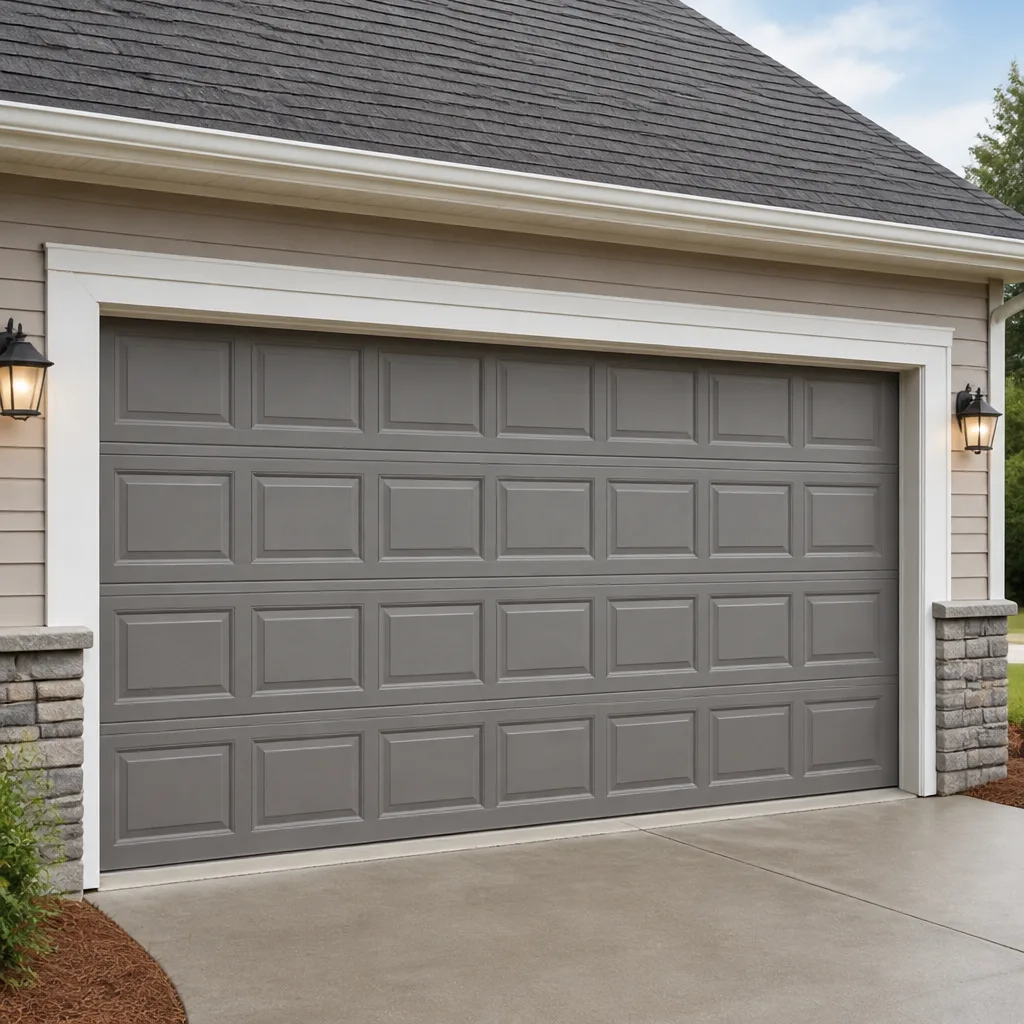 Raised-panel steel
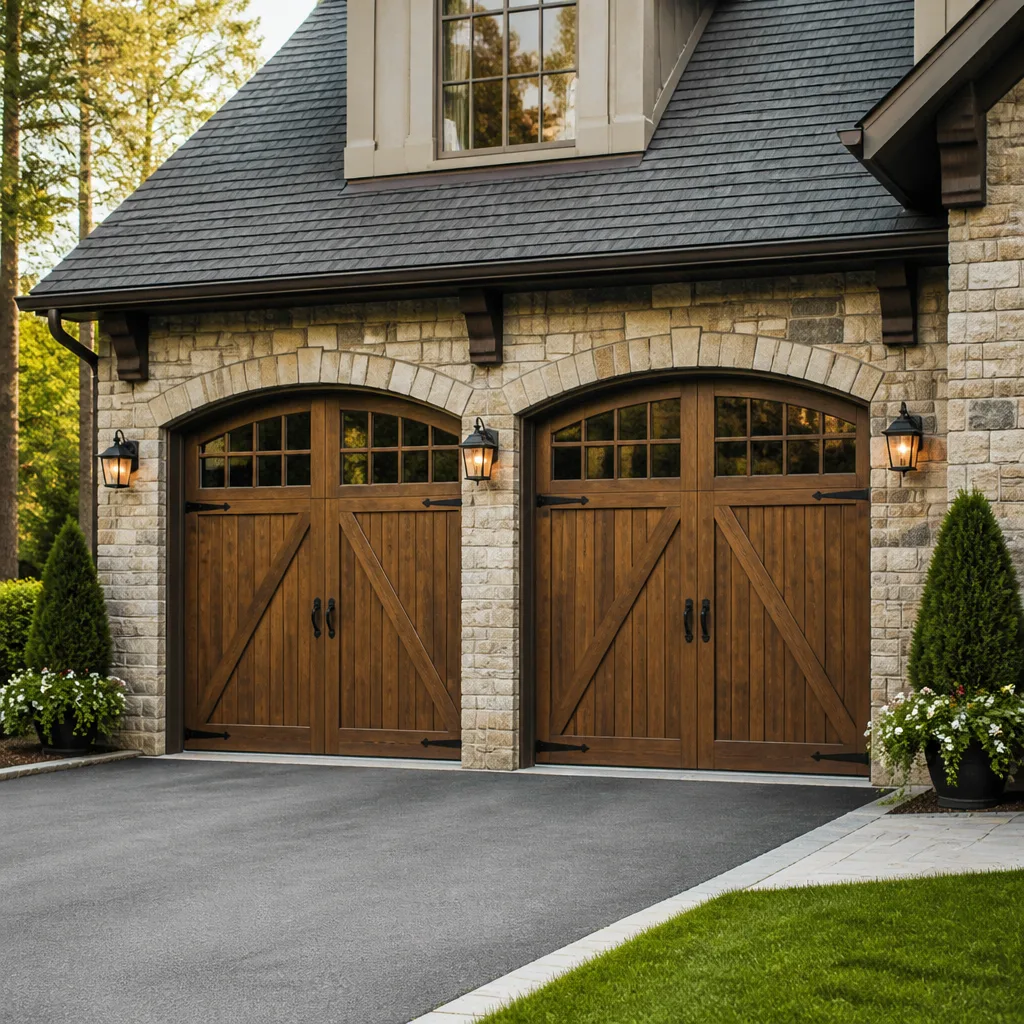 Carriage house
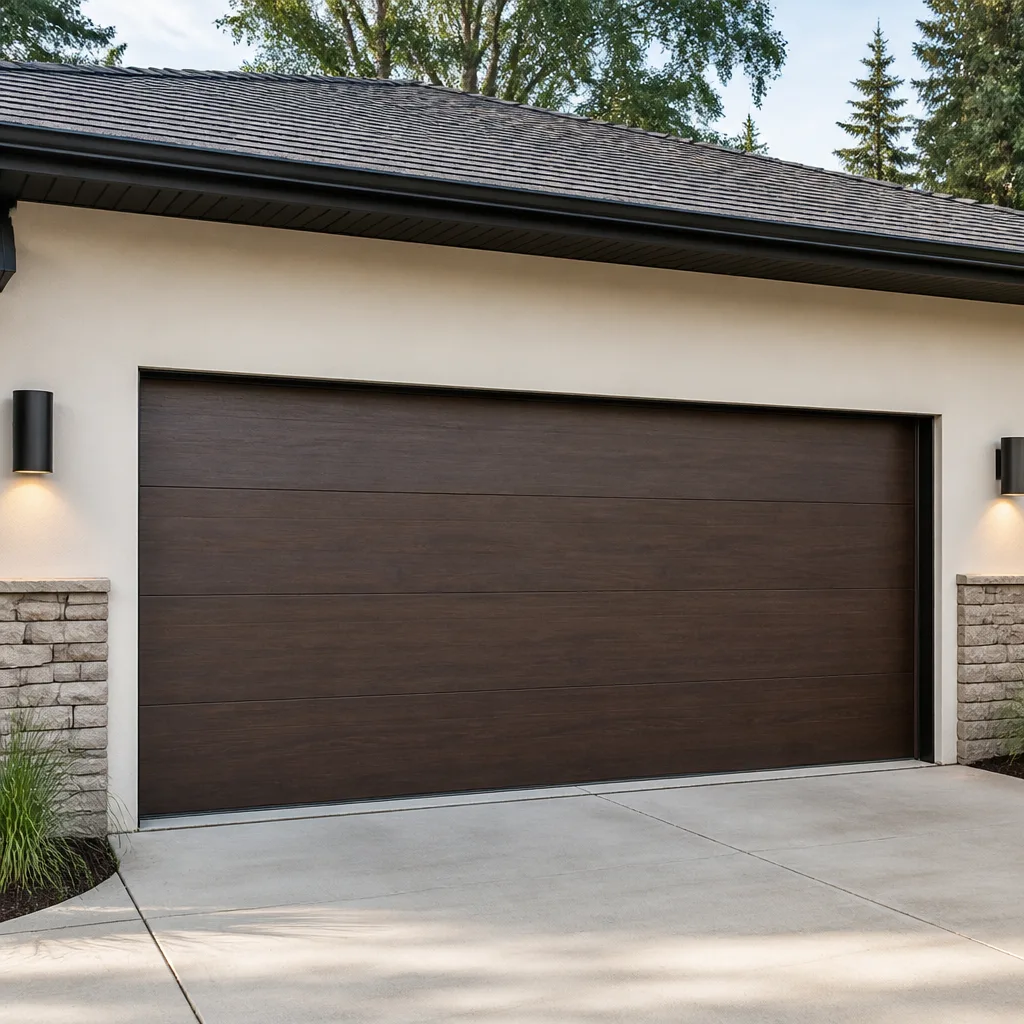 Modern flush
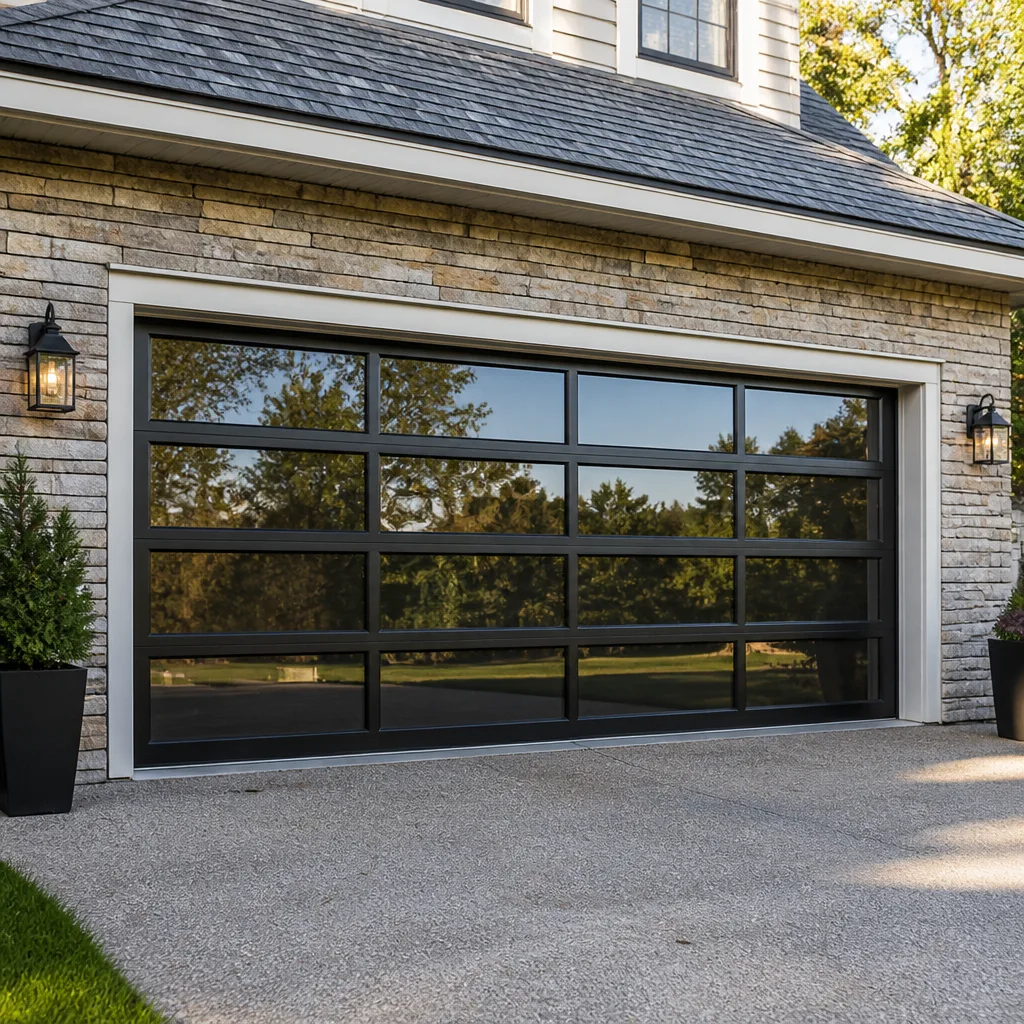 Full-view glass
 LiftMaster openers
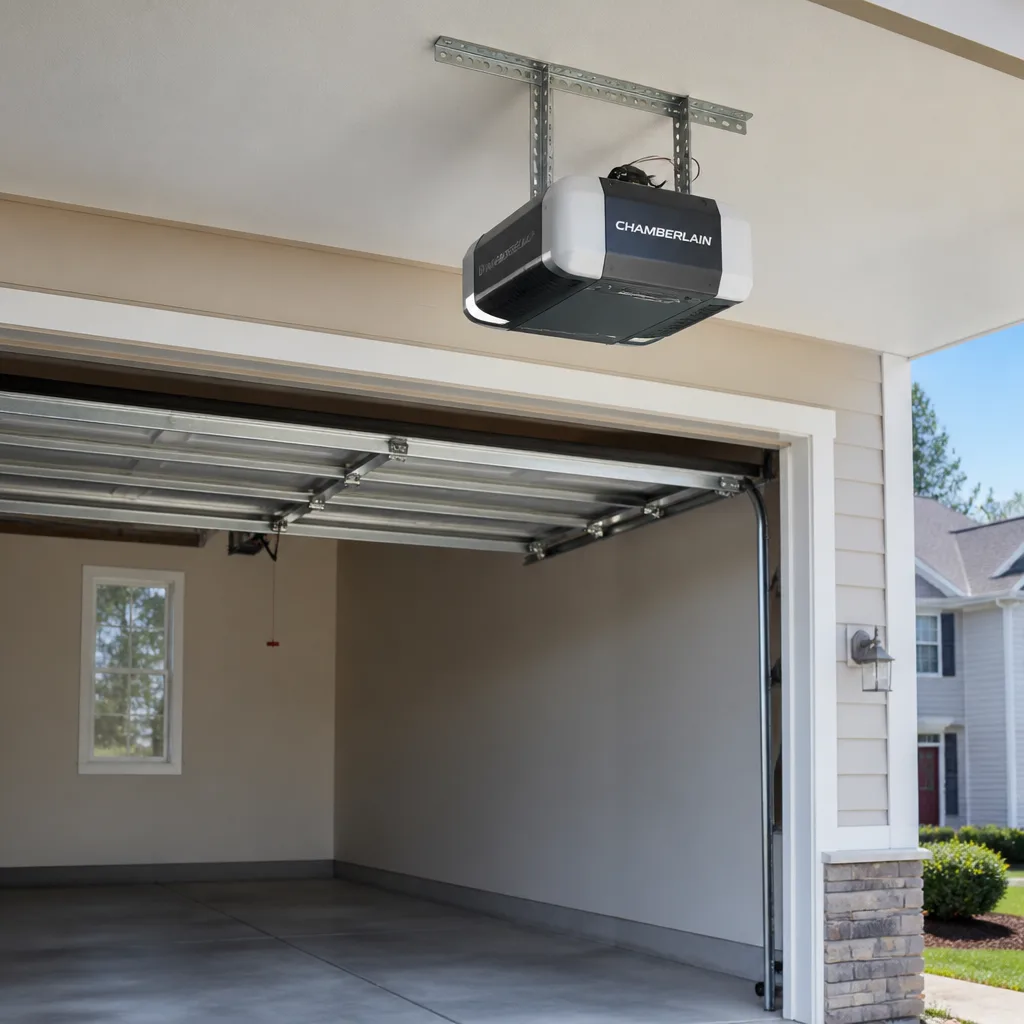 Chamberlain openers
Full 25-point door and opener safety check with every visit - springs, cables, rollers, tracks, and your LiftMaster or Chamberlain opener included
You get a price before we start. It does not change when the pro arrives.
Get your free estimateSeasonal Garage Door Care for Bloomington: Year-Round Homeowner’s Guide
Ask most homeowners when a garage door is most likely to fail and they’ll say January. In our experience around Bloomington, the roughest month for track misalignment is actually April. Winter frost heave builds up under the slab for months, and when it releases in early spring it does so unevenly. The ground shifts, the door frame moves with it, and suddenly a door that ran fine all winter rubs, binds, or drifts off center. Cold weather had been holding everything rigidly in place; the thaw lets it move. This guide walks through Bloomington’s real weather calendar and what each season does to your springs, tracks, panels, opener, and seals. You’ll get inspection sequences you can actually run, a fall prep routine that decides how February goes, and a short list of jobs to leave to trained hands.
Quick Answer
Garage doors in Bloomington need four seasonal checkpoints: a spring thaw inspection in April and May to catch frost heave damage, summer humidity control to prevent wood door warping, a fall weatherstripping and lubrication routine before the first freeze, and a winter triage plan for cold snaps. Most of the year-round work is inspection and minor adjustment; springs, cables, and opener repairs belong to trained technicians.
Styles & brands we work with
- Raised-panel steel
- Carriage house
- Modern flush
- Full-view glass
- LiftMaster openers
- Chamberlain openers
Table of Contents
- Spring Thaw: The April Inspection Sequence
- Summer Humidity and Wood Door Warping
- Fall Prep: Weatherstripping and Seals Before the Freeze
- Winterizing an Automatic Opener’s Battery Backup
- The First 48 Hours of a Cold Snap: A Triage Sequence
- How a Bloomington Winter Actually Treats Your Door
- Your Year-at-a-Glance Care Calendar
- When to Call a Professional
Spring Thaw: The April Inspection Sequence
Frost heave is the quiet damage dealer in Bloomington. Through winter, moisture in the soil under and around your garage slab freezes, expands, and lifts. The slab and the frame attached to it ride up with it. Then April arrives, the ground thaws from the top down and from the edges inward, and different parts of that slab settle at different rates. What was a level, aligned frame in February can be a few degrees off by mid-April. That’s enough to make rollers bind in the track, throw the door out of square, and put uneven load on the springs. A national guide won’t tell you this because most of the country doesn’t freeze this deep. Here, it’s the single most important inspection of the year.
Run this sequence once the ground has thawed and again a few weeks later:
- Look at the door from outside, standing back. Does the bottom edge sit parallel to the floor? A gap that’s wider on one side than the other is the first sign the frame has shifted.
- Open and close the door by hand with the opener disconnected. Listen for rubbing, scraping, or a rhythmic thump. Feel for spots where the door binds.
- Check the vertical tracks with a level. They should be plumb. If a track has moved off plumb since fall, the frame likely shifted underneath it.
- Inspect the track mounting brackets and the wood around them. Look for fresh cracks in the concrete at the base of the frame, or gaps where the frame meets the slab.
- Test the door’s balance. Pull the emergency release, lift the door halfway, and let go. It should hold roughly in place. A door that drops or rises on its own has a spring or balance problem.
- Inspect the bottom seal for tears from ice that got dragged along the floor over the winter.
If a track is out of plumb or the door is binding, stop cycling it with the opener. Running a misaligned door under power grinds the rollers and can bend panels. A trained technician can realign a track and correct the frame in a single visit, and it’s far cheaper than the panel replacement a misaligned door eventually causes. Our garage door repair service covers exactly this thaw-season realignment work.
Summer Humidity and Wood Door Warping
Bloomington summers are humid, and that humidity is the main enemy of a wood garage door. Wood absorbs moisture from the air and expands; when the air dries out it contracts again. Do that cycle repeatedly across a Minnesota summer and the door starts to cup, bow, and separate at the seams. The panels that absorb the most are the ones facing the afternoon sun on the south and west sides of a house, because heat drives moisture deeper into the wood and then pulls it back out fast. This is a failure mode most seasonal guides skip entirely, because a door in a dry climate never sees it.
What prevents it is a finish that stays intact through the season, checked on a schedule:
- Late spring, before the humid stretch: wash the door, let it dry completely, and check the existing finish for cracks, peeling, or bare wood. Any spot where water can get in needs sealing.
- Re-treat on a two-year cycle at minimum for a painted door, and more often for a stained or clear-sealed door, which weathers faster. If you can press a coin edge into the finish and it leaves a mark, the finish is too soft; let it cure longer before adding another coat.
- Check the bottom edge and the panel seams specifically. These are where water pools and where warping starts. Probe the end grain with a fingernail. Soft wood means moisture has already gotten in.
- Keep the door’s underside and the frame dry. If water stands on the garage floor after rain, the seal or the grading is the problem, and no amount of refinishing fixes wood that’s sitting in water.
- Inspect in August. That’s when summer warping shows itself. Cupped panel edges, a door that no longer meets the seal evenly, or a bow you can see when you sight down the door are all signs the wood has absorbed too much.
Composite and steel doors don’t warp, but they have their own summer issue: the panels expand in heat, and a door that’s tight against the frame in a mild month can bind in August. If your steel door suddenly scrapes the frame on hot afternoons and doesn’t on cool mornings, that’s thermal expansion, not a track failure, and it usually calls for a small clearance adjustment rather than a repair.
Fall Prep: Weatherstripping and Seals Before the Freeze
Whether you spend February fighting ice bonds depends almost entirely on what you do in October. Ice bonds form when meltwater runs into a gap under or around the door, freezes overnight, and welds the seal to the floor. Every morning the opener has to break that bond, and every morning it loses a little. A seal that’s cracked, flat, or missing pieces lets in far more water than a good one, and once the water is in, the freeze does the rest. Fall is your last clean shot at fixing this before the cold locks everything in place.
Here’s the sequence, done before the first hard freeze:
- Check the bottom seal along its whole length. It should touch the floor evenly with light compression. Any daylight, any gap, any flattening means it needs replacing.
- Inspect the side and top weatherstripping. Run a hand along the inside edge on a cold morning. Felt or rubber strips that are brittle, torn, or pulling away from the stop molding won’t block wind-driven snow.
- Seal the frame-to-wall gaps. Look at the joint between the door frame and the wall, inside and out. Caulk any gap that lets air through. Cold air leaking past the frame is what puts ice on the inside of the door.
- Lubricate, don’t grease. Apply a garage-door-specific lubricant to the springs, hinges, rollers, and the opener’s rail. Never use a heavy grease in fall; it thickens in the cold and drags the door.
- Check the door’s balance before the cold arrives. A balanced door is easier on the opener all winter. A door that’s already hanging heavy will only get worse.
- Look up. Check the opener’s rail and mounting for anything loose. Vibration from a loose bracket gets worse in the cold, and it’s better to tighten it in October than to deal with a racked door in a February cold snap.
The weatherstripping and caulk work you can absolutely do yourself. What we’d flag as the one fall task to hand off is anything that involves the springs or the door’s balance. Those are under high tension, and adjusting them is dangerous. Our garage door spring repair service is a dedicated part of what we do for exactly this reason: it’s a high-risk job that gets botched more than any other part of a garage door.
Winterizing an Automatic Opener’s Battery Backup
Cold kills battery chemistry. A sealed lead-acid backup battery that performs fine at 70 degrees can deliver much less of its rated capacity at Minnesota winter temperatures, and if it’s already a few years old, that loss can mean the difference between the opener working in a power outage and not. Most homeowners never think about the backup battery until the power goes out, then discover on a January night that it was dead. Testing it before temperatures drop is a two-minute job that saves a much worse one.
Here’s how we’d approach it for the openers we work on, including the LiftMaster and Chamberlain units that are common in Bloomington homes:
- Locate the battery. On most current openers it’s a small sealed battery inside the motor housing or a side-mounted pack. Check the manual if you’re not sure.
- Test it before the cold. With the opener plugged in, unplug the power at the outlet (or trip the opener’s breaker), then open and close the door once with the remote. If it hesitates, grinds, or won’t run, the battery is failing and needs replacing before winter.
- Replace any battery older than a few seasons or one that’s ever been through a full drain. A backup battery is cheap compared to being locked out during an outage.
- Keep the motor and battery housing free of dust and debris and clear of anything stacked against it. Some homeowners keep the garage near freezing; a warmer, better-insulated housing extends battery life.
- Re-test in January. Cold weakens even a good battery. A re-test mid-winter tells you whether it’s still holding up when it matters most.
If your opener is a Raynor or Genie model, the backup system may be built differently, or there may not be a battery backup at all. That’s where brand-specific knowledge matters. We work on the brand already in your garage, and a technician who knows your opener will tell you exactly what battery it takes and whether the backup is still reliable. If the opener itself has been acting up, our garage door opener repair service covers the diagnostics.
The First 48 Hours of a Cold Snap: A Triage Sequence
A hard cold snap is a stress test. If your door was already showing a minor problem in October, the first sub-zero stretch will likely take that problem from minor to real. The tension is that you don’t want to do anything risky in the cold and you don’t want to wait for it to freeze solid. Here’s how we’d triage it in the first 48 hours:
- Don’t force a stuck door. If the door won’t move when you press the remote, don’t keep cycling the opener. You’ll either burn out the motor or strip the gears. Pull the emergency release only if you can do it safely and the door is stable.
- Check the obvious first. Confirm the opener has power and the remote’s battery is fine. Cold drains batteries fast. These are the cheapest possible explanations and worth ruling out before anything else.
- Look at the bottom seal. Ice bonded to the floor can freeze the door closed. If you can see ice under the door, don’t force it. A safe way to free it is a little warm water along the seal, never a hammer or a pry bar.
- Listen to the opener. If it runs but the door doesn’t move, the problem is in the door, not the opener. If it clicks or hums without moving, stop and call.
- Check for a broken spring. With the door down, look at the springs (the coil above the door or the torsion spring on the shaft). A visible gap in the coil, or a spring that looks stretched and loose, means it’s broken. Stop using the door and call for service.
- Don’t try to fix a spring or cable in the cold. Cold makes metal brittle and makes every adjustment more likely to fail. Springs and cables are high-tension parts; work on them belongs to trained hands.
If your door was fine until the cold hit, you’re probably looking at a battery, a seized seal, or an opener issue. If it was already borderline in fall, the cold likely pushed a marginal component over the edge. Either way, a same-day visit often fixes it, and we answer the phone when a door fails on a cold night. If a call comes in outside dispatch hours, it’s booked into the next opening.
How a Bloomington Winter Actually Treats Your Door
Winter is the season everyone plans for, and it’s worth being specific about what it does to each component. Cold changes the way a garage door behaves in ways that don’t show up in mild weather. Metal contracts, lubricants thicken, seals stiffen, and the whole assembly moves a little differently than it did in October. Understanding which part reacts which way tells you what to watch for and when a symptom means something.
- Metals contract. Steel tracks, the door’s frame, and the panels all shrink slightly in the cold. That’s enough to change clearances. A door that fit perfectly in September can rub in January, and then fit perfectly again in May. If a door only scrapes in deep winter, it’s a clearance issue, not a bent track.
- Lubricant thickens. This is why fall lubrication matters and why grease is wrong for winter. A heavy grease that was smooth in summer gets tacky in the cold and drags on the rollers.
- Seals stiffen and crack. Rubber and vinyl weatherstripping that flexes easily at 40 degrees gets hard and brittle at zero. An old seal will crack and let in snow. A good seal flexes and keeps the ice out.
- The opener works harder. Every component adds friction in the cold: thicker lubricant, stiff seals, contracted metal. A door that was borderline on balance in fall puts real strain on the opener in January. That’s why balance matters before winter.
- Ice bonds form at the seal. Meltwater runs down the door and freezes at the bottom. If the seal is tight and the door meets the floor evenly, the ice has less to bond to. If the seal is bad, you fight it all winter.
- Battery chemistry slows. Cold reduces what a backup battery can deliver, so a healthy battery is the difference between an outage being a minor inconvenience and a real problem.
Our advice for winter is simple: if your door was healthy going into it, watch and listen. If it was showing any of the issues we flagged in fall, treat them before the cold turns them into a failure. When the door won’t move, we move fast, and winter is when most of those calls come in.
Your Year-at-a-Glance Care Calendar
Here’s the whole year on one page. This is the calendar we’d hand a Bloomington homeowner who asks what seasonal care actually involves. It’s built around Minnesota’s actual weather, not a generic national schedule.
- April and May: Spring thaw inspection. Check the door’s level and plumb, run the balance test, inspect tracks and frame mounting, look for frost heave damage, and check the bottom seal for winter tears. This is the most important inspection of the year and the one most people skip.
- June through August: Summer humidity check. For wood doors, inspect the finish, wash and re-seal, and check the bottom edge and seams. For steel and composite doors, watch for heat-related binding on hot afternoons. Check the opener’s operation.
- September and October: Fall prep. Replace a worn bottom seal, inspect side and top weatherstripping, caulk the frame-to-wall gaps, lubricate the springs and moving parts, check the door’s balance, and tighten any loose opener mounting. Test the battery backup before the cold.
- November through March: Winter watch. Listen for new noises, watch for ice bonds at the seal, test the backup battery in January, and triage any cold-snap failures within 48 hours. Keep the door balanced and the seal tight.
- Any time: Same-day repair for a broken spring, opener failure, or a door that won’t move. That work doesn’t follow the calendar, and we don’t wait for a season to fix it.
If you only do one thing from this list, make it the spring thaw inspection. If you do two, add the fall seal prep. Between them, they prevent most of the avoidable failures we see in Bloomington. Full installation and new-door work is scheduled around the calendar too: that’s measured, ordered, and fitted to your opening, and it’s worth planning ahead rather than rushing. Our Bloomington Garage Door Repair Co page lays out the whole range of services if you want to see what’s available.
Common Mistakes to Avoid
- Waiting until winter to deal with a fall problem. A seal that’s cracking in October will be a fight by February. The cold doesn’t create new problems; it magnifies the ones already there. Prep in fall, not after the first freeze.
- Skipping the spring thaw inspection. April is when frost heave does its damage in Bloomington, and a door that ran fine all winter can be out of alignment by May. Wait, and a small realignment becomes a panel replacement.
- Using heavy grease or oil in fall. The thick stuff drags in the cold. Use a garage-door-specific lubricant, and use it lightly. A sticky track is worse than a dry one in winter.
- Forcing a frozen door with the opener. When the door is bonded to the floor, running the opener strips gears and burns motors. Free the bond first, or call. A stuck door is a whole lot cheaper to fix than a stripped opener.
- Ignoring the backup battery until an outage. Cold weather is exactly when the power is most likely to fail, and a dead battery means the opener is dead too. Test and replace in fall, then re-test in January.
- Treating a wood door like it doesn’t need a finish. Minnesota humidity is unforgiving to bare or failing wood. A re-treatment on a two-year cycle, checked in August, is what prevents the warping and cupping most people blame on the door itself.
- Diagnosing a track problem as an alignment problem. Sometimes a door that rubs has a shifted track; sometimes it’s a bent panel, a bad roller, or a broken spring. Guessing at the wrong cause is how a small repair becomes a big one. Get it looked at by someone who knows which it is.
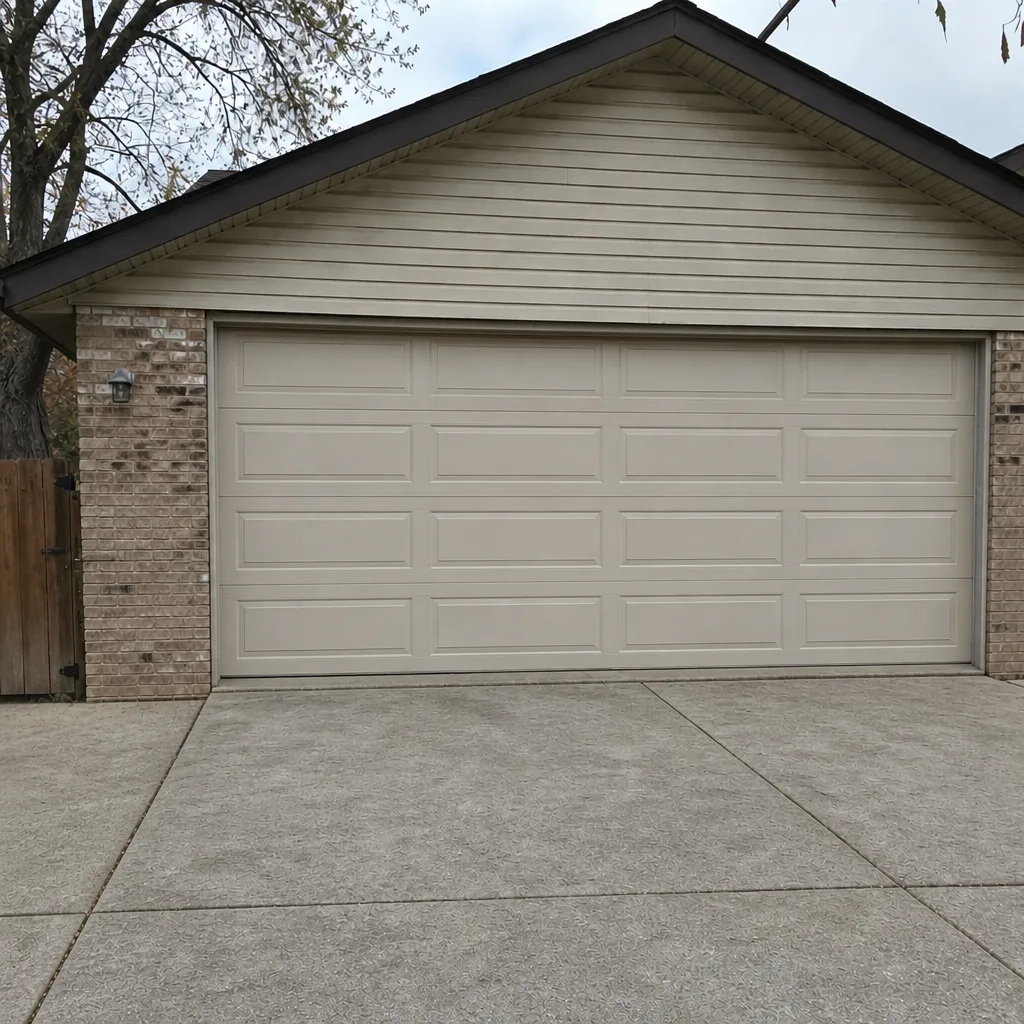
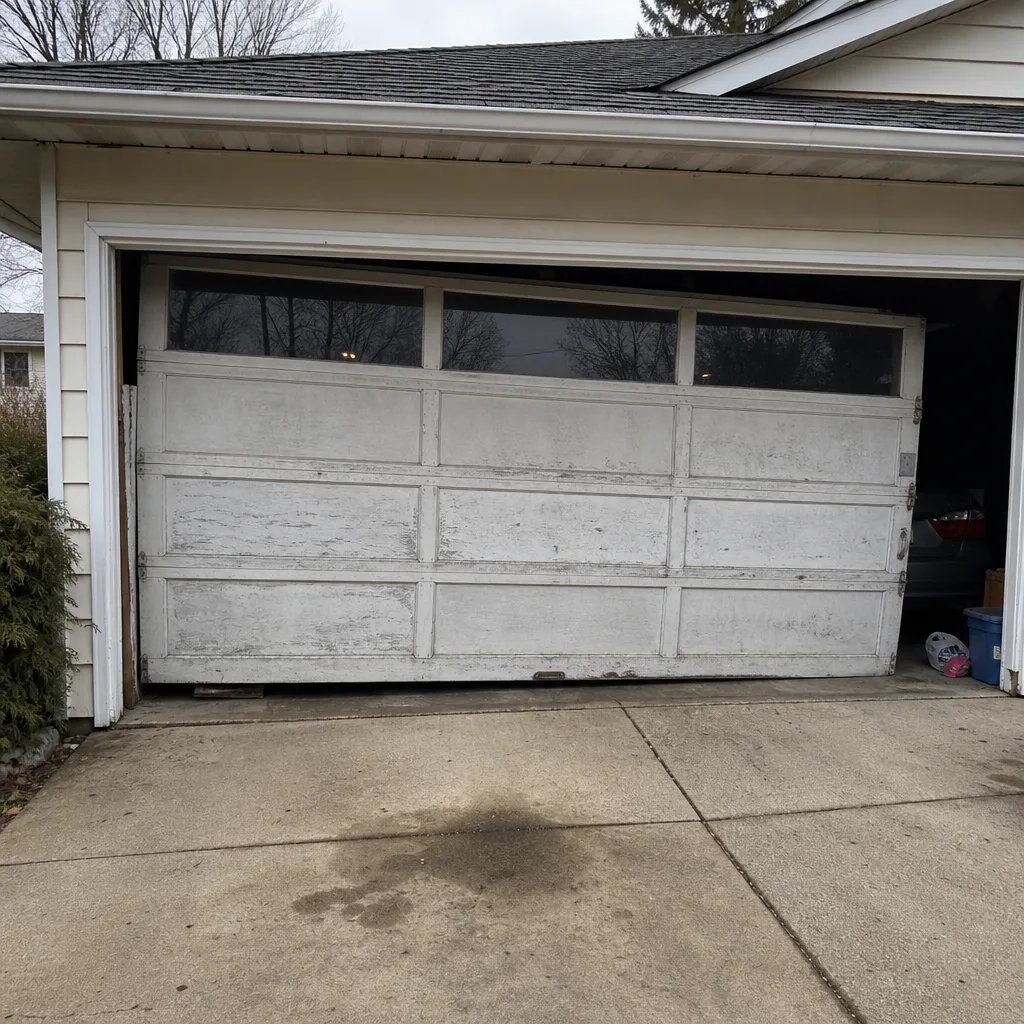
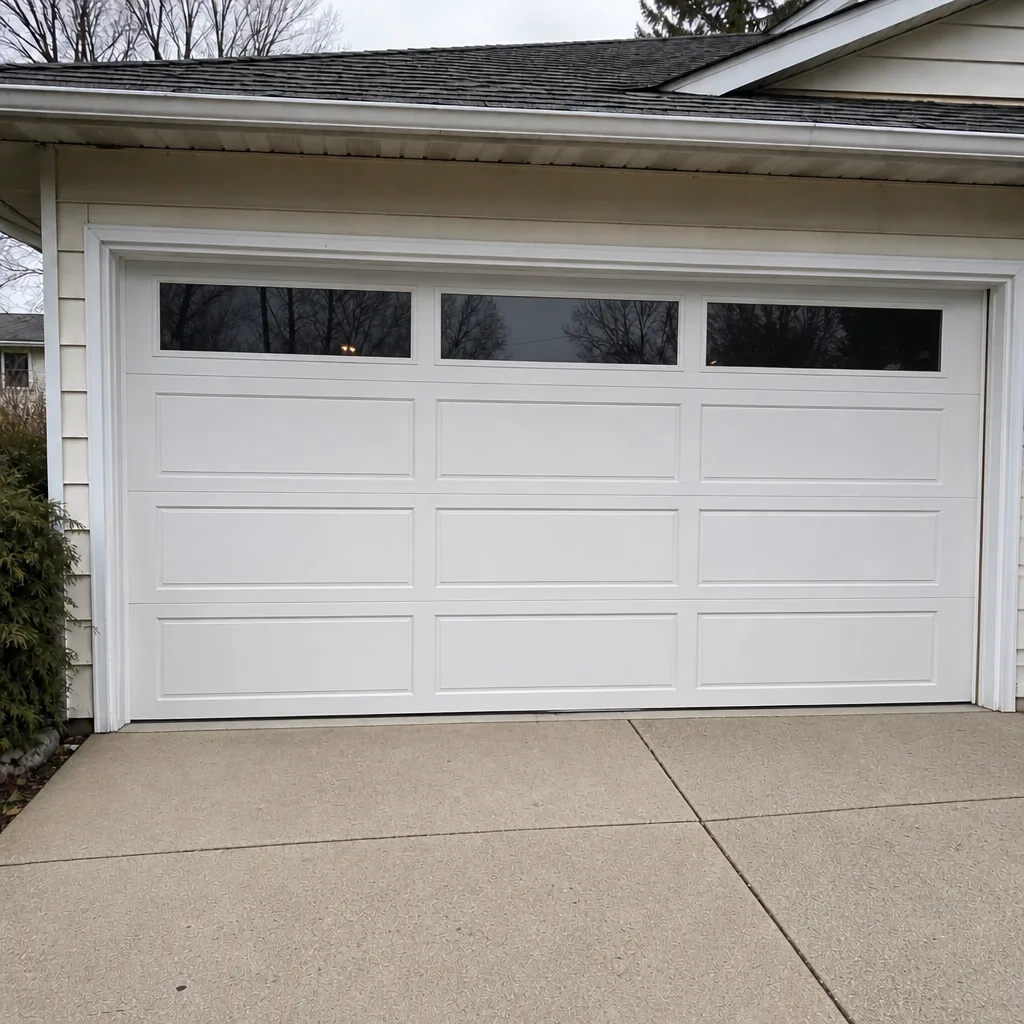
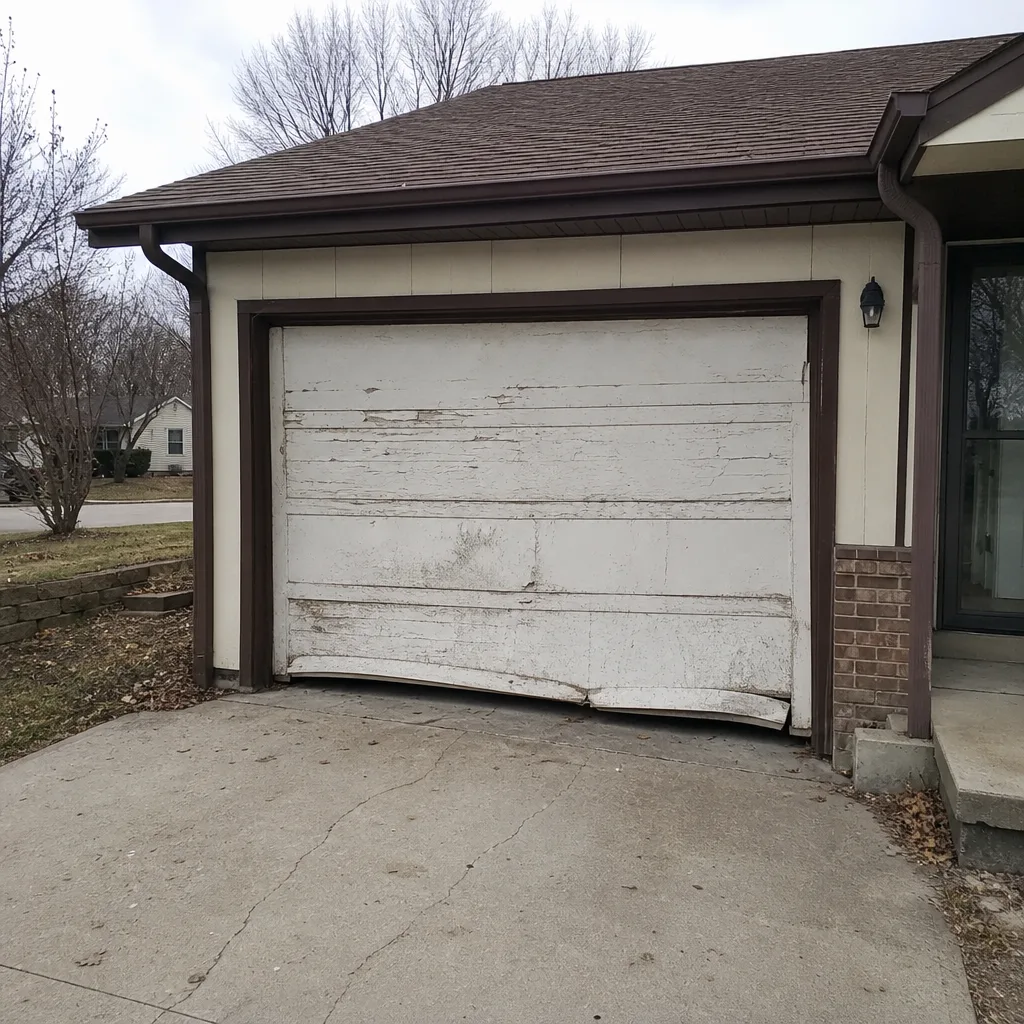
See the difference
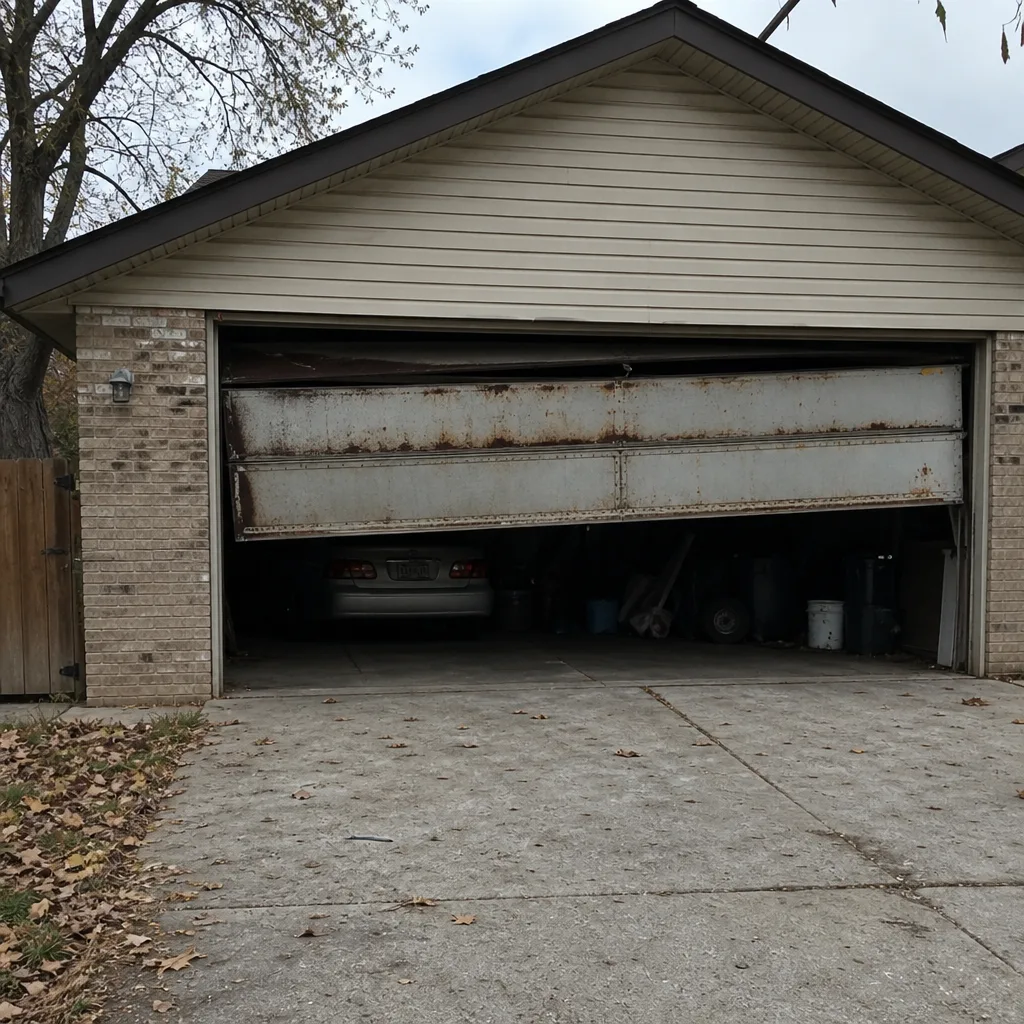 Before
 After
 Before
 After
 Before
 After
When to Call a Professional
Most of this guide is work you can do yourself: inspections, cleaning, caulking, replacing weatherstripping, testing a battery. Then there’s the short list of jobs that are genuinely dangerous or easy to botch. Springs and cables are the first: they’re under high tension, and a mistake there can cause serious injury. A door that’s out of balance, a track that’s moved off plumb, a panel that’s bent, an opener that’s failing, or any symptom you can’t pin to a single cause all belong with a trained technician. If your door won’t open, won’t close, or has a visible broken spring, stop and call. Bloomington Garage Door Repair Co offers free estimates in Bloomington. Call (833) 508-9255. We answer 24/7. Fast dispatch from 7am to 7pm, Sunday through Friday.
Frequently Asked Questions
April and early May are the worst months for alignment problems in Bloomington, not January. Frost heave that builds up under the slab all winter releases unevenly during the thaw, which shifts the door frame and throws the door out of alignment. That’s why the spring inspection sequence matters more than the winter one. Call (833) 508-9255 for an exact quote on a realignment – estimates are free.
Spring repair in Bloomington typically runs in the low-to-mid hundreds of dollars for a single spring, with the exact figure set by the written estimate after a technician looks at the door. Reminder: the price is quoted and agreed before any work starts. Call (833) 508-9255 for an exact quote – estimates are free.
Yes, replacing bottom seals and side weatherstripping is a reasonable DIY job. The one thing to avoid is anything that touches the springs or the door’s balance, which is dangerous and belongs to a trained technician. If your door binds or hangs heavy after you finish, stop and call. Call (833) 508-9255 for an exact quote – estimates are free.
Most wood doors in Bloomington need a new finish at least every two years, and stained or clear-coated doors often need it more often. Check the finish in late spring before the humid stretch and again in August, which is when warping shows itself. A finish that’s checked on that cycle is what prevents the warping and cupping that hit wood doors in Minnesota summers.
Frost heave is the usual cause. The ground under and around your garage slab freezes and lifts through winter, then settles unevenly during the thaw, which can shift the frame and throw the door out of alignment. A door that ran fine in February can bind by May. A track realignment and balance check usually fixes it. Call (833) 508-9255 for an exact quote – estimates are free.
No. The written estimate is the price, and it’s quoted and agreed before any work starts. What can change is the scope if a technician finds a second issue once the door is looked at, and you’ll be told before anything else is touched. Call (833) 508-9255 for an exact quote – estimates are free.
Yes. We work on LiftMaster, Chamberlain, Genie, Clopay, Amarr, Wayne Dalton, Craftsman, and Raynor equipment, and a technician diagnoses the actual make and model rather than guessing. If your opener is a Craftsman or a Raynor unit, the year-round care routine may differ slightly, and knowing the model means the right advice. Call (833) 508-9255 for an exact quote – estimates are free.
We’re closed on Saturdays, so if a door fails then, call and we’ll book you in for Sunday. The phone is answered when you call. Call (833) 508-9255. We answer 24/7. Fast dispatch from 7am to 7pm, Sunday through Friday.
The Bottom Line
Bloomington’s climate doesn’t just create winter problems. The spring thaw is the real alignment season, summer humidity is the real wood door season, and the fall seal prep is what decides how February goes. Build your year around the thaw inspection in April and May, the humidity check through summer, and the weatherstripping and battery routine in fall. Handle the safe jobs yourself, and hand off the springs, cables, opener, and realignment work to trained hands. Spring repair, opener service, and new installation are all part of one call here, and whether your door is a LiftMaster, a Chamberlain, or something older, the seasonal care you run this year is what keeps it working at the next cold snap.
Need help now or planning ahead? Call Bloomington Garage Door Repair Co at (833) 508-9255 for a free estimate on a seasonal inspection. Estimates are free and the price is quoted before any work starts. We answer 24/7. Fast dispatch from 7am to 7pm, Sunday through Friday.
Written by the team at Bloomington Garage Door Repair Co.