
Last updated November 21, 2026
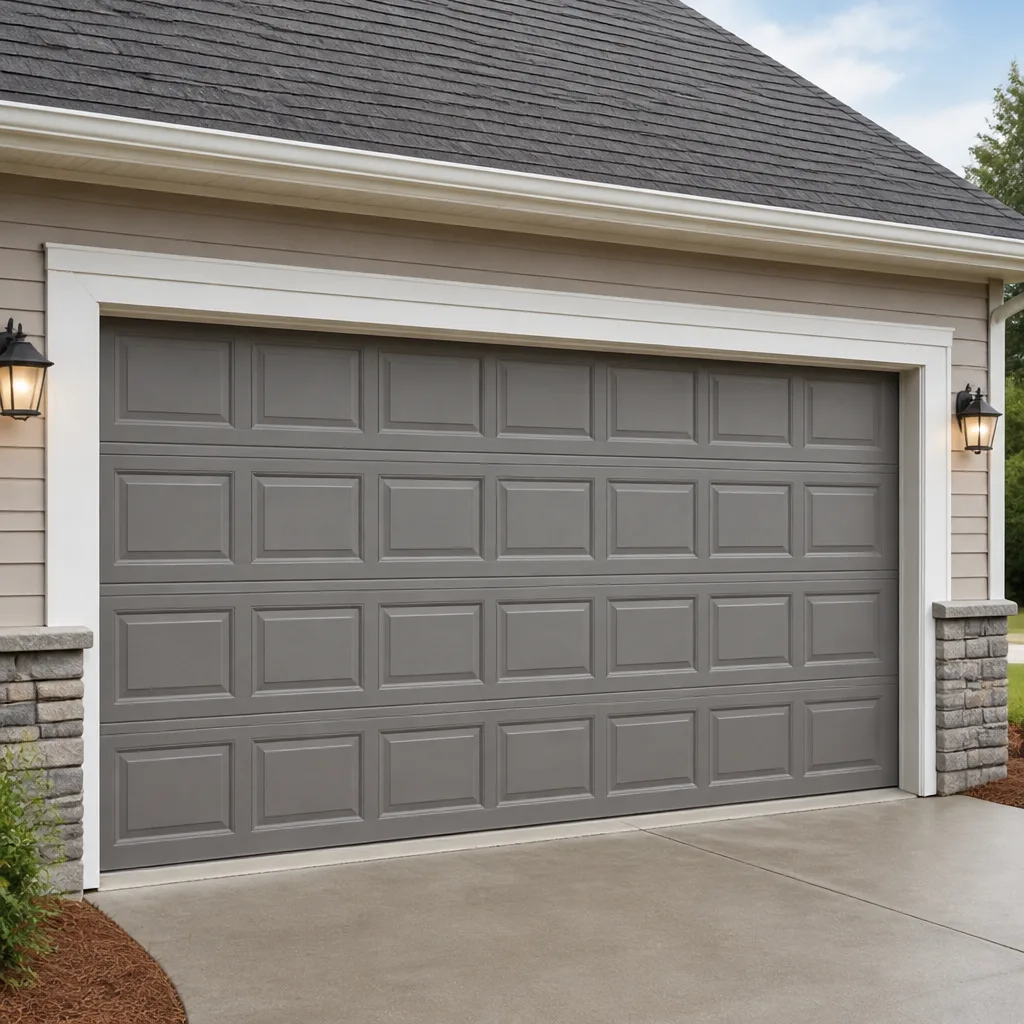 Raised-panel steel
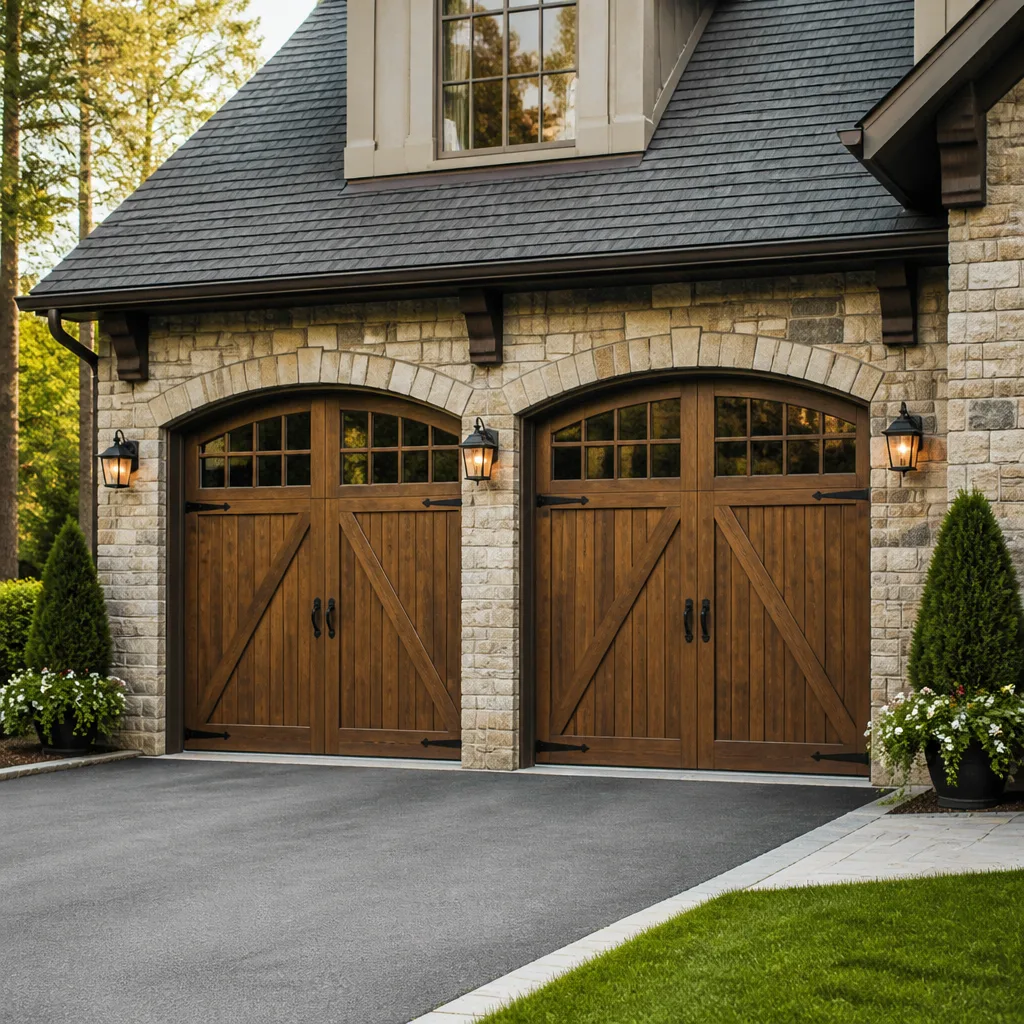 Carriage house
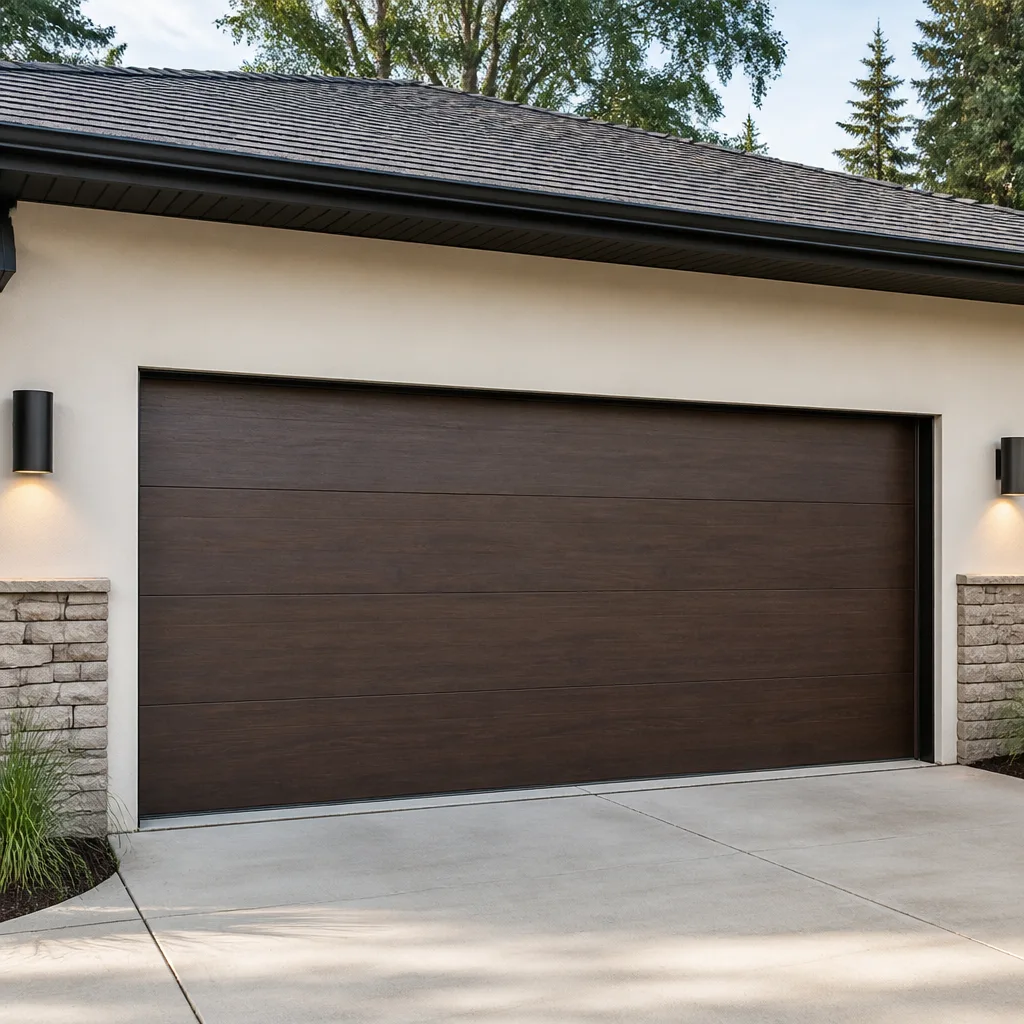 Modern flush
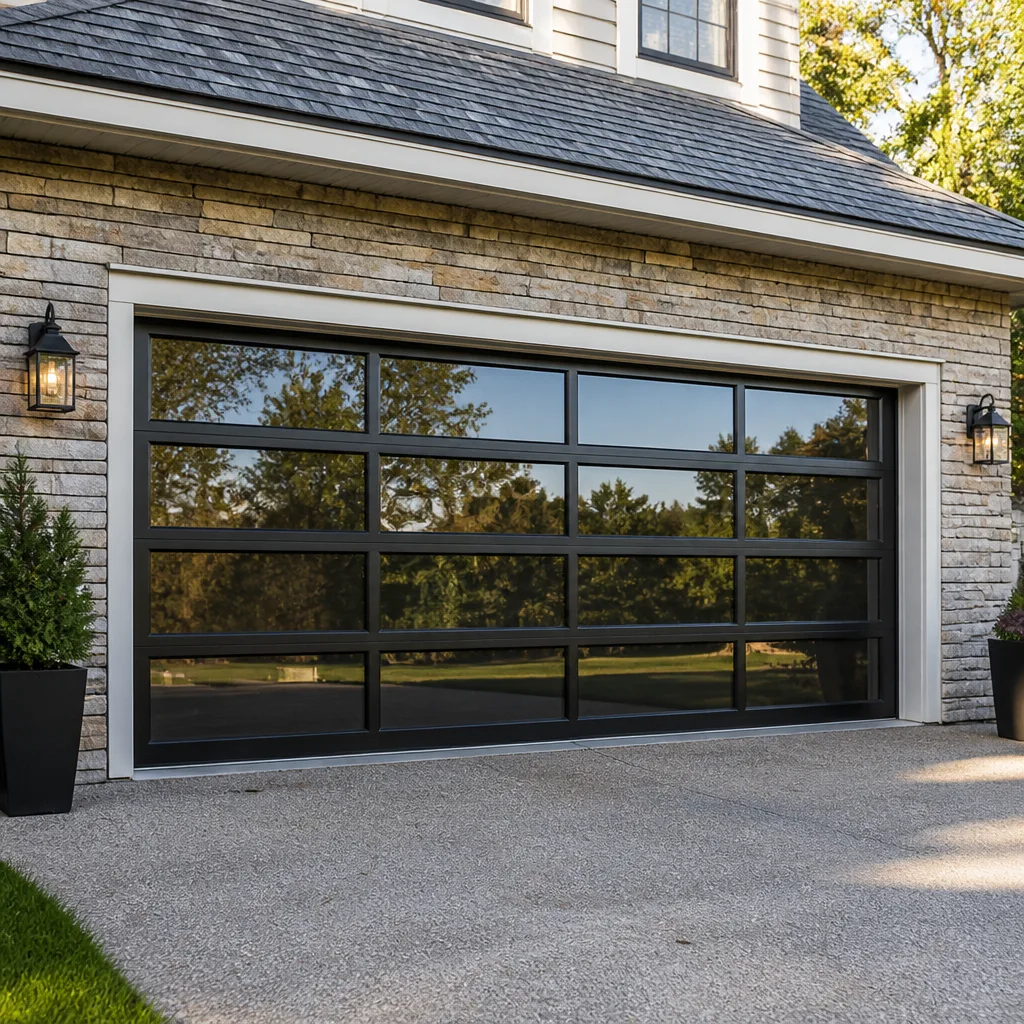 Full-view glass
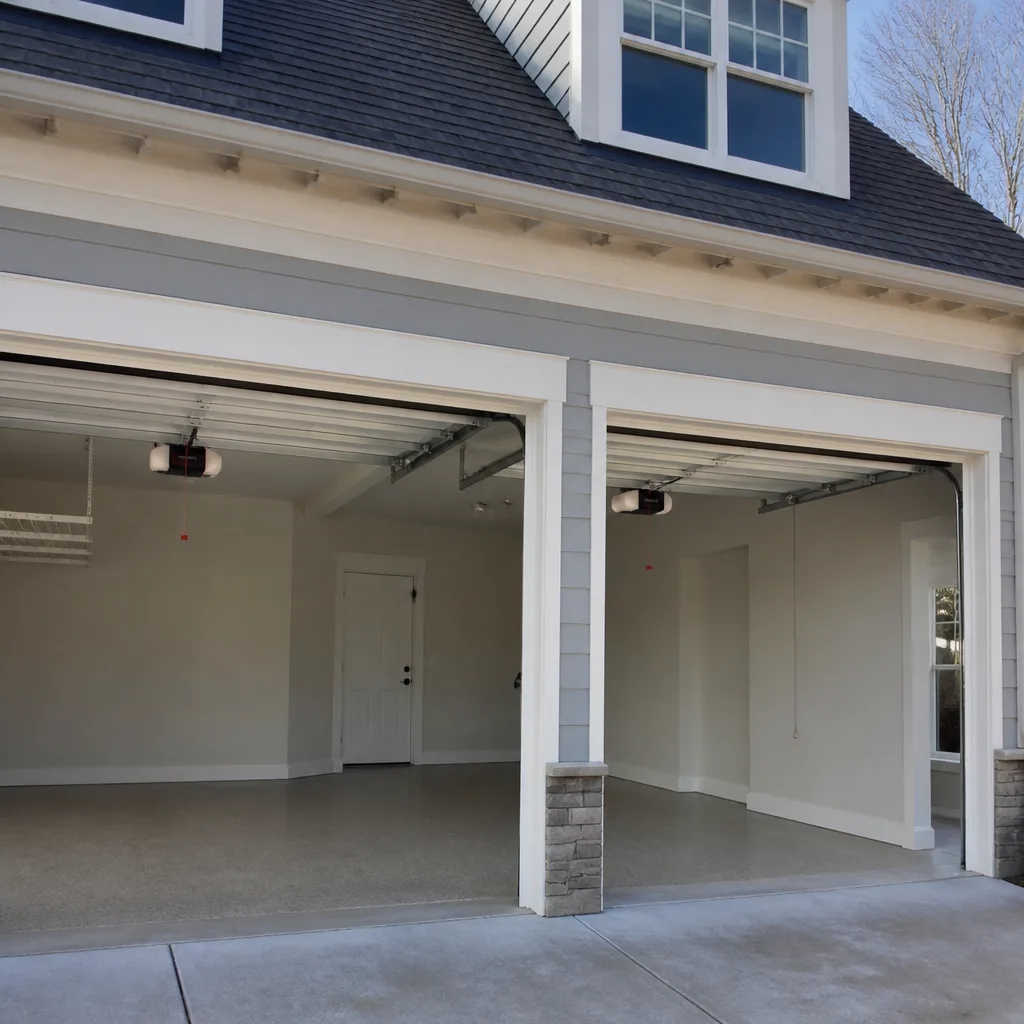 LiftMaster openers
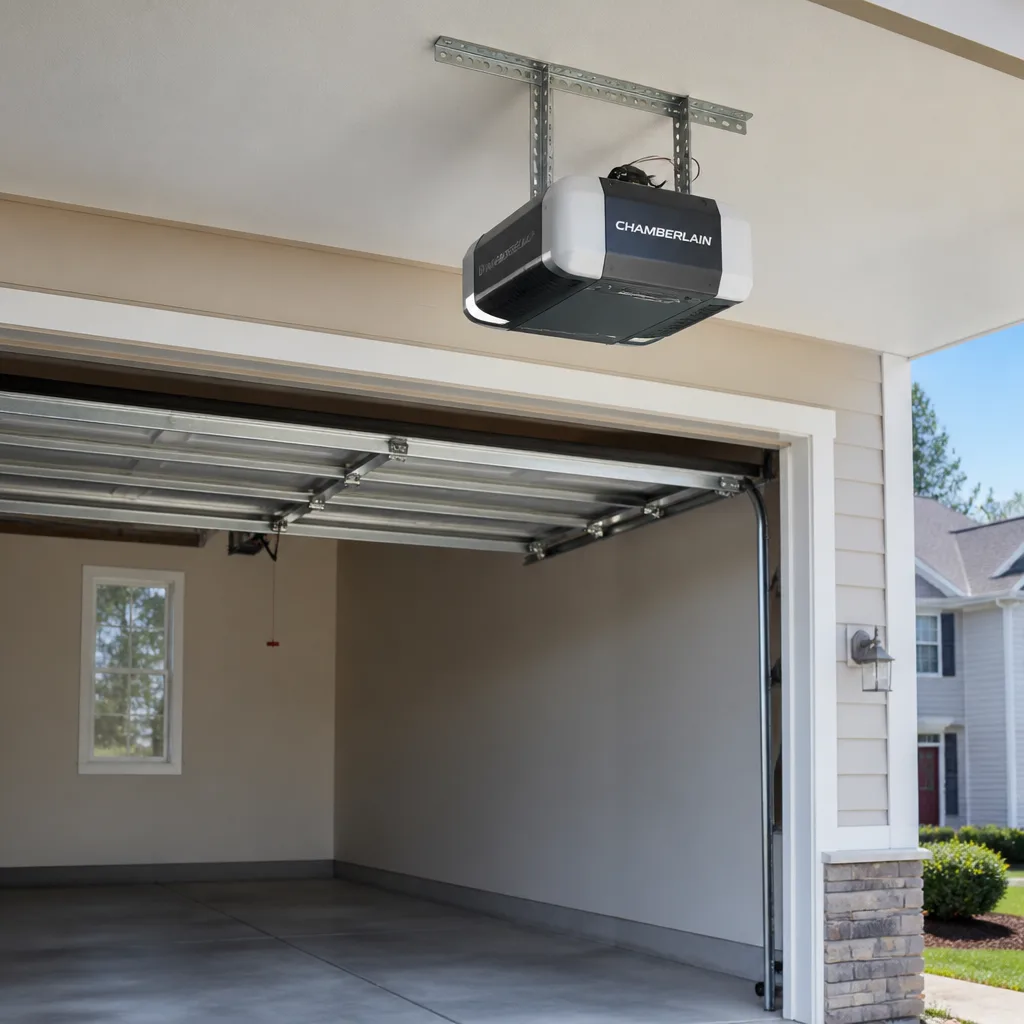 Chamberlain openers
Full 25-point door and opener safety check with every visit - springs, cables, rollers, tracks, and your LiftMaster or Chamberlain opener included
You get a price before we start. It does not change when the pro arrives.
Get your free estimateGarage Door Emergency Preparedness Guide for Bloomington Homes
Most Bloomington homeowners think a garage door emergency is a snapped spring. In our experience, the more common problem is quieter: a door that won’t move because nobody in the house has ever pulled the manual release cord, and now they’re standing in the dark looking for it. Winter here makes that worse. Ice storms knock out power, temperatures drop below zero, and a door that worked fine in October suddenly won’t budge in January. This guide is a practical protocol for the failures that actually happen in this region. You’ll learn how to release your opener by hand, what to do when a spring breaks in the cold, how to secure a door that won’t close, which parts wear fastest during an outage, and what to have ready before anything goes wrong in Bloomington.
Quick Answer
A garage door emergency in Bloomington usually comes down to three steps: get the door into a safe, secured position, keep people and cars clear of it, and call a trained technician for anything involving springs, cables, or a door that has come off its track. Manual release, power restoration, and temporary securing are things you can handle. Spring and cable work is not a homeowner job, especially in sub-zero temperatures.
Styles & brands we work with
- Raised-panel steel
- Carriage house
- Modern flush
- Full-view glass
- LiftMaster openers
- Chamberlain openers
Table of Contents
- How Do You Release a Garage Door by Hand in the Dark?
- What Should You Do When a Spring Breaks Below 10°F?
- How Do You Secure a Garage Door That Won’t Close?
- What Belongs on an Emergency Contact and Documentation Checklist?
- What Degrades Fastest During a Cold-Weather Power Outage?
- Which Failures Are True Emergencies and Which Can Wait?
- Does Your Door Brand Change What You Should Do?
- How Do You Winterize a Garage Door Before the First Hard Freeze?
How Do You Release a Garage Door by Hand in the Dark?
On most openers installed in Bloomington homes, the manual release is a red or orange handle hanging from a cord just behind the door, near the opener rail. Pull it straight down toward the floor with a firm, steady motion, then lift the door by hand. That’s the whole procedure. The difficulty is doing it calmly, in the dark, the first time.
Practice it once while the power is on. This is the single most useful thing you can do this month. Here’s the sequence:
- Turn on your phone light or a flashlight and locate the release cord. It hangs from the carriage assembly, not the wall-mounted control.
- Make sure no one is standing under the door. Lifting it by hand means the door’s weight is now held by you and its springs.
- Pull the handle straight down toward the floor. On a chain-drive opener, it disengages with a distinct click.
- Lift the door slowly with both hands, using the bottom section. A properly balanced door should open with moderate effort and stay up on its own. A door that feels extremely heavy has a spring problem, and you should stop.
- To re-engage, close the door fully, then push the release handle back toward the opener door until it clicks. Run the opener once and watch for a full cycle.
Belt-drive and screw-drive models from LiftMaster, Chamberlain, and Genie follow the same pull-down principle, though the handle shape varies. If you can’t find a cord at all, the opener likely uses a wall-mounted release or a trolley you slide by hand; check the manual, or call us and we’ll talk you through it. We answer 24/7.
What Should You Do When a Spring Breaks Below 10°F?
A spring that snaps in cold weather is a serious situation, and the first thing to do is nothing that involves touching the hardware. Torsion springs and the cables attached to them are under enormous tension, and in below-freezing temperatures the steel becomes brittle. A door that suddenly dropped and a spring that broke are two halves of one problem: the door is no longer supported, and lifting or forcing it can send a cable snapping.
Do this instead:
- Clear the area. Keep kids, pets, and cars away from the door. If a car is trapped inside, do not try to force the door up by hand to free it.
- Look, don’t pull. A broken spring usually shows as a visible gap in the coil above the door, or a resting door that sags to one side. Note what you see; don’t try to wind or clamp anything.
- Disconnect nothing. If the opener still runs but the door doesn’t move, stop running the opener. You’ll burn out the motor and can damage the carriage.
- Call. Give us the door’s make (Clopay, Amarr, Wayne Dalton, and Raynor are all common here) and the approximate age. A trained technician can replace both springs as a matched pair, which is the right way, and check the cables and rollers while they’re there.
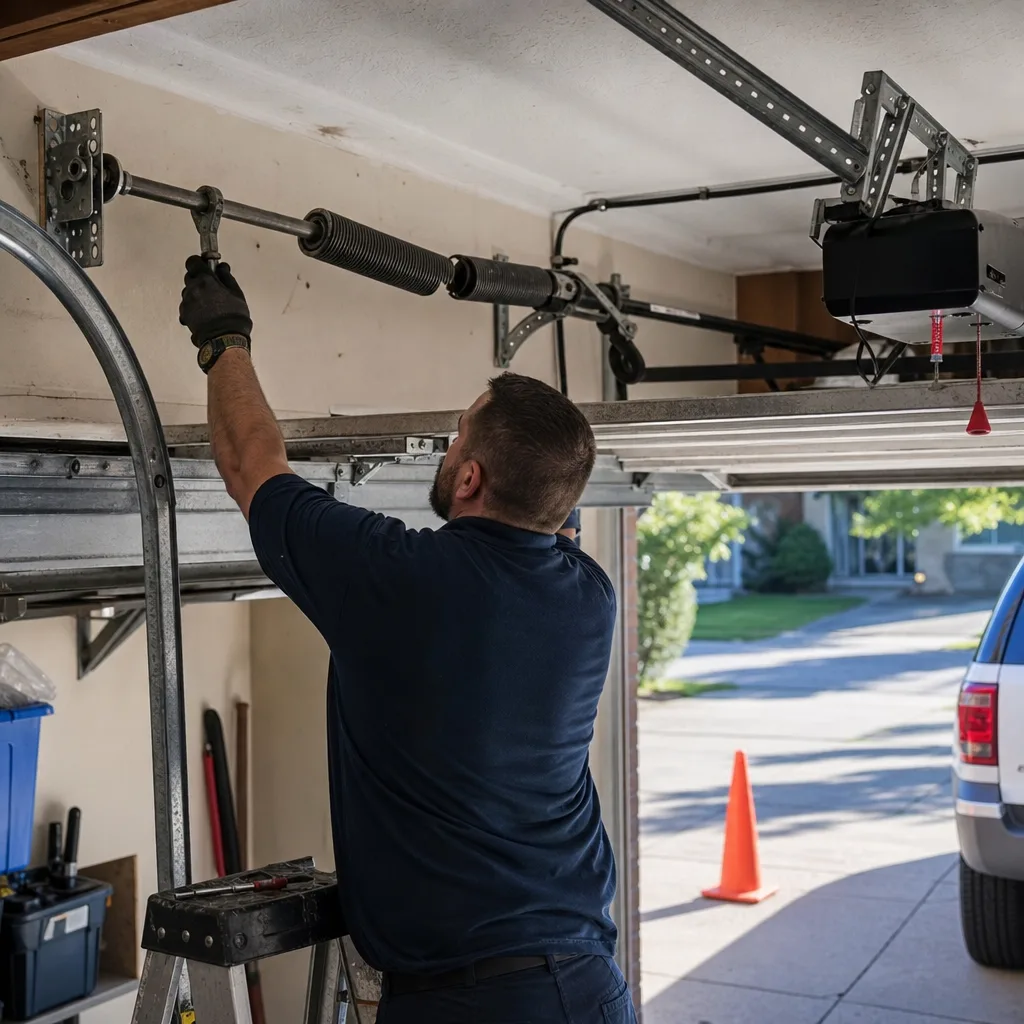
This is the single most dangerous repair on a home. Springs are wound to high tension with a specific number of turns, and a small mistake can cause serious injury. The best thing you can do in the cold is call and stay clear. Our garage door spring repair covers exactly this situation, and our technicians have up to 14 years of experience with it.
How Do You Secure a Garage Door That Won’t Close?
When a door won’t close after a cable or spring failure, you have two problems at once: your home is open to the outside, and the garage is losing heat. Your goal is to get the door down and held in place without putting stress on the broken parts. There’s a right way and a way that will make things worse.
Start by checking whether the door is off its track. If a roller has popped out and the door is crooked, forcing it down can bend the panels. Don’t. Instead:
- Look for the obstruction first. A photo-eye sensor knocked out of alignment, a piece of debris, or snow packed at the threshold will stop a door from closing. Clear the doorway and check that both sensor lights are on and pointing at each other.
- Try the wall button again. If the opener hums but doesn’t move the door, the problem is mechanical, not electrical.
- If the door is level and on its track, lower it by hand (after pulling the manual release) until it’s fully down, then hold it there. A door with a broken spring won’t stay down on its own.
- Prop or brace the door from the inside with something stable. A heavy-duty clamp on the track just above a roller, applied carefully, keeps the door from rolling up. This is a temporary fix for one night, not a solution.
- Never leave the door partially open and rely on the opener to hold it. Cut the power to the opener at the wall switch if you’re unsure.
Once the door is secured, get it looked at. A door that won’t close is also a door that can fall. This is the kind of time-sensitive problem our garage door repair handles, and estimates are free.
What Belongs on an Emergency Contact and Documentation Checklist?
The time to assemble your garage door emergency kit is a mild afternoon in Bloomington, not the night the power goes out. Put these things in one place, a folder or a note on your phone, and your future self will thank you. The list is short and most of it is just information.
- The door and opener brand and model. If you can, photograph the sticker on the opener motor housing and the inside of the door’s bottom section. Knowing whether you have a LiftMaster or a Genie saves time on the call.
- The opener’s manual. A PDF downloaded to your phone is fine. You’ll want the manual release and reprogramming instructions.
- Your technician’s number. Save Bloomington Garage Door Repair Co at (833) 508-9255. We answer 24/7.
- A written note on what happened. “Door won’t open, opener light blinks five times, no visible spring gap” tells your technician more than a panicked phone call.
- A flashlight and a stepstool. The release cord is above eye level on many doors.
- A heavy clamp or a piece of 2×4. Good for holding a door that won’t stay down.
- Your car keys and a spare. If the garage is your only exit and the door is stuck, you need to know where the house keys are.
Record one more thing: the date you last had the door serviced. If it’s been more than a couple of years, get on the schedule before winter. Whether you plan ahead or call in the middle of the night, when the door won’t move, we move fast.
What Degrades Fastest During a Cold-Weather Power Outage?
An extended outage in a Bloomington winter puts stress on the garage door system in ways that don’t show up in summer. The opener’s battery backup, if you have one, drains. Lubricant thickens. And the door itself, now cold, weighs on the springs and cables differently than it did when it was 70°F outside.
The parts that suffer first:
- The opener’s battery backup. Many modern openers from LiftMaster and Chamberlain have one and will run the door several more times after the power drops. Once it’s spent, the door is manual-only. Test your backup once a season by cutting the breaker for a few minutes.
- Lubricant on the rollers, hinges, and tracks. Cold weather thickens grease. If the door gets sluggish and noisy after a cold snap, that’s usually the reason.
- The torsion springs. Cold steel is less forgiving. A spring that was near the end of its life will often break right after the first hard freeze.
- The photo-eye sensors. Snow piled up at the threshold or a knocked sensor bracket will keep the door from closing, which feels like an emergency when it’s only a 30-second fix.
When the power comes back, run the door once by hand to make sure it’s balanced, then run it with the opener and watch. Listen for grinding, look for a door that jerks or stops partway. If anything’s off, call us for garage door opener repair. Fast dispatch from 7am to 7pm, Sunday through Friday, and we answer the phone 24/7.
Which Failures Are True Emergencies and Which Can Wait?
Not every garage door problem is an emergency, and treating them all like one just causes stress when a simpler fix would do. In our experience, the real emergencies are the ones with a safety risk or a security risk attached. The rest can usually wait for a scheduled visit.
Call right away when:
- A spring or cable has broken. The door is unsupported and dangerous.
- The door has come off its track or is hanging crooked.
- A car is trapped inside and you need to get out safely.
- The door won’t close and you can’t secure it, leaving the house open.
- A panel has been damaged and the door could fall.
These can usually be scheduled:
- A noisy door, sluggish operation, or a remote that’s stopped working.
- A door that reverses before closing, or closes partway and stops.
- A weak opener motor or a wall button that needs a second press.
- An opener that works from the wall but not the remote (often just the battery).
One caveat: a door that won’t close is worth calling about even if it seems minor, because a garage opening in a Minnesota winter is a heat-loss problem, and heat loss under a stuck door is real. When the door won’t move, we move fast. Estimates are free, so the call costs you nothing.
Does Your Door Brand Change What You Should Do?
The manual release is nearly universal, but the diagnostics differ by brand. That’s why it matters to know the make. We work on the brand already in your garage, and the door and opener need to match the right approach. We service equipment from LiftMaster, Chamberlain, Genie, Clopay, Amarr, Wayne Dalton, Craftsman, and Raynor, and knowing the model means the technician brings the right parts and doesn’t guess.
A few examples of how the brand changes the picture:
- Clopay and Amarr doors are common on newer construction in the Twin Cities area. Their torsion and extension spring configurations vary by model, and the door’s weight determines the spring spec.
- Wayne Dalton and Raynor systems sometimes use proprietary hardware or a different balance design. If a technician has never seen the model, they can spend a visit diagnosing instead of repairing.
- LiftMaster and Chamberlain openers share a lot of internals, but the error codes and the battery backup models differ. Knowing which one you have is half of the fix.
- Craftsman and Genie openers are everywhere in older Bloomington homes and have their own release and programming quirks.
If you don’t know your brand, photograph the labels and call. We’ll tell you what we need to know. Spring replacement, opener repair, or a full new door: one call covers all of it.
How Do You Winterize a Garage Door Before the First Hard Freeze?
A little work in October prevents most of the calls we get in January. Winterizing is not complicated, and none of it involves touching a spring. It’s about lubrication, balance, and weather sealing, all of which you can do yourself.
Work through this once before the temperature drops:
- Lubricate. Use a silicone-based or white lithium lubricant on the hinges, rollers, and tracks. Don’t use grease; it thickens in the cold and collects dust.
- Check the balance. Disconnect the opener and lift the door halfway. If it stays in place, it’s balanced. If it drops, the springs need attention.
- Inspect the weatherstripping and bottom seal. A cracked seal lets cold air and snow in. Replace it before it freezes to the floor.
- Test the safety reverse. Put a 2×4 flat on the floor under the door and close it. The door should reverse on contact. Test the photo-eye sensors too by passing your foot between them while the door is closing.
- Clear the tracks. Sweep out leaves and debris. Check that the tracks are straight and free of dents.
- Check the opener’s battery backup. Cut the breaker for a few minutes and confirm the door still runs. Replace the battery if it doesn’t.
If something feels off during the check, call us. Better to schedule a repair at Bloomington Garage Door Repair Co on a mild day than to wait for the night the door stops working. Our technicians have up to 14 years of experience and see these problems all winter long.
Common Mistakes to Avoid
- Pulling the release cord without checking the door’s weight first. A door with a broken spring can fall fast when you release it. Test the balance lightly before you disengage anything.
- Forcing a frozen door. In Bloomington, a door that’s frozen to the seal or threshold will strip the opener’s gears if you keep hitting the button. Clear the ice first.
- Grabbing the torsion spring with gloves and “giving it a try.” The spring is wound to high tension. Even a small adjustment can cause serious injury. This is not a DIY repair, no matter what a video says.
- Using WD-40 or grease on the tracks. Both attract dirt and gum up in cold weather. Use the right lubricant.
- Letting a car stay trapped under a broken door. If the door is hanging and a car is underneath, don’t drive it out and don’t try to force the door up. Call and let a technician stabilize it.
- Assuming the opener is the problem. A door that won’t lift is usually a spring or balance issue, not a dead motor. Replacing the opener wastes money.
- Waiting until the spring breaks. Most broken springs show warning signs, and a noisy, slow, or unbalanced door is asking for attention before the first freeze.
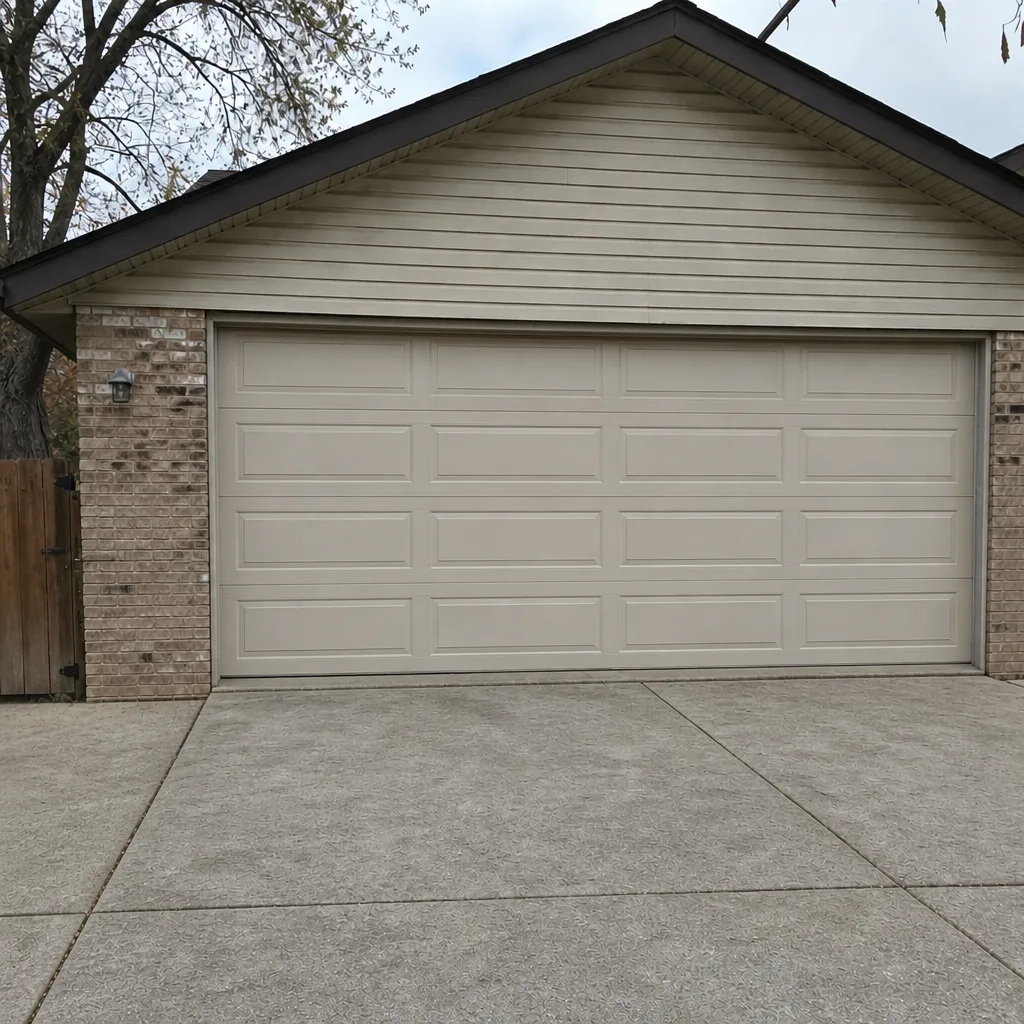
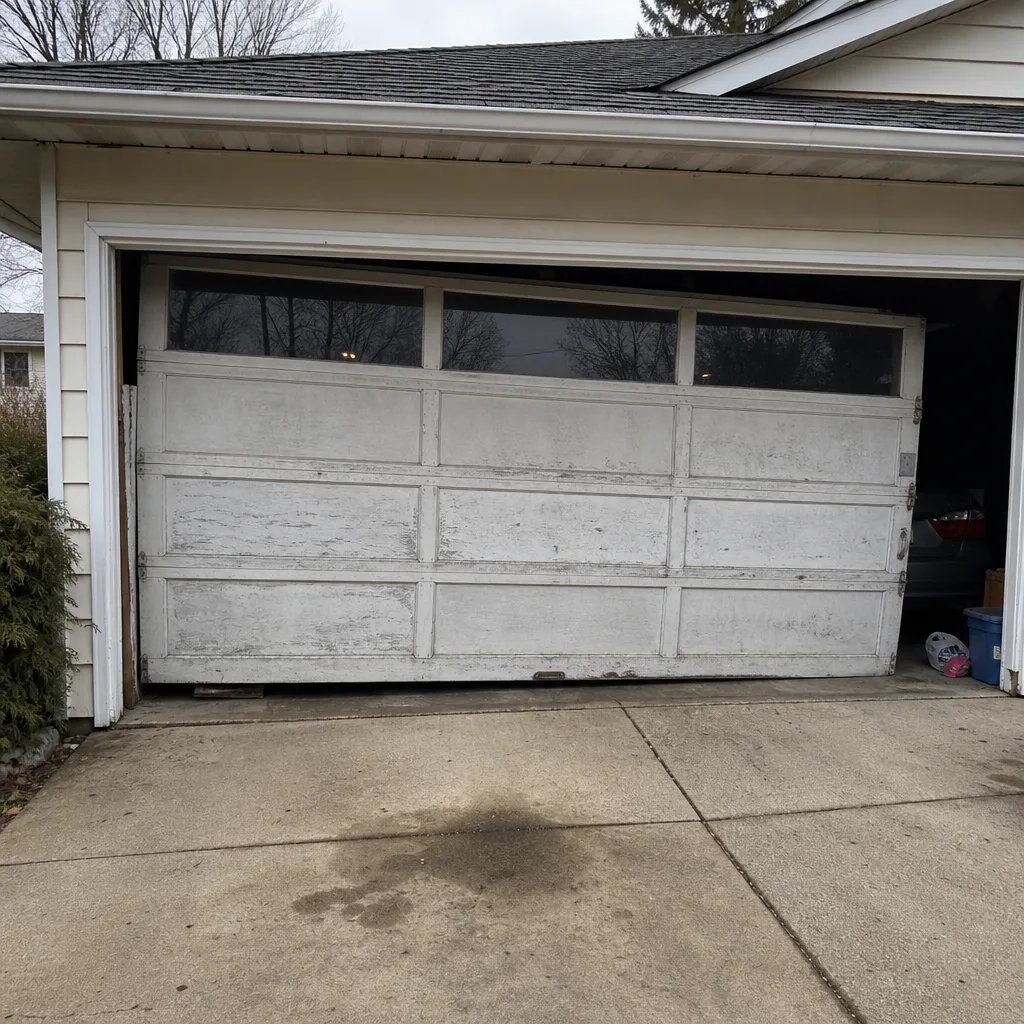
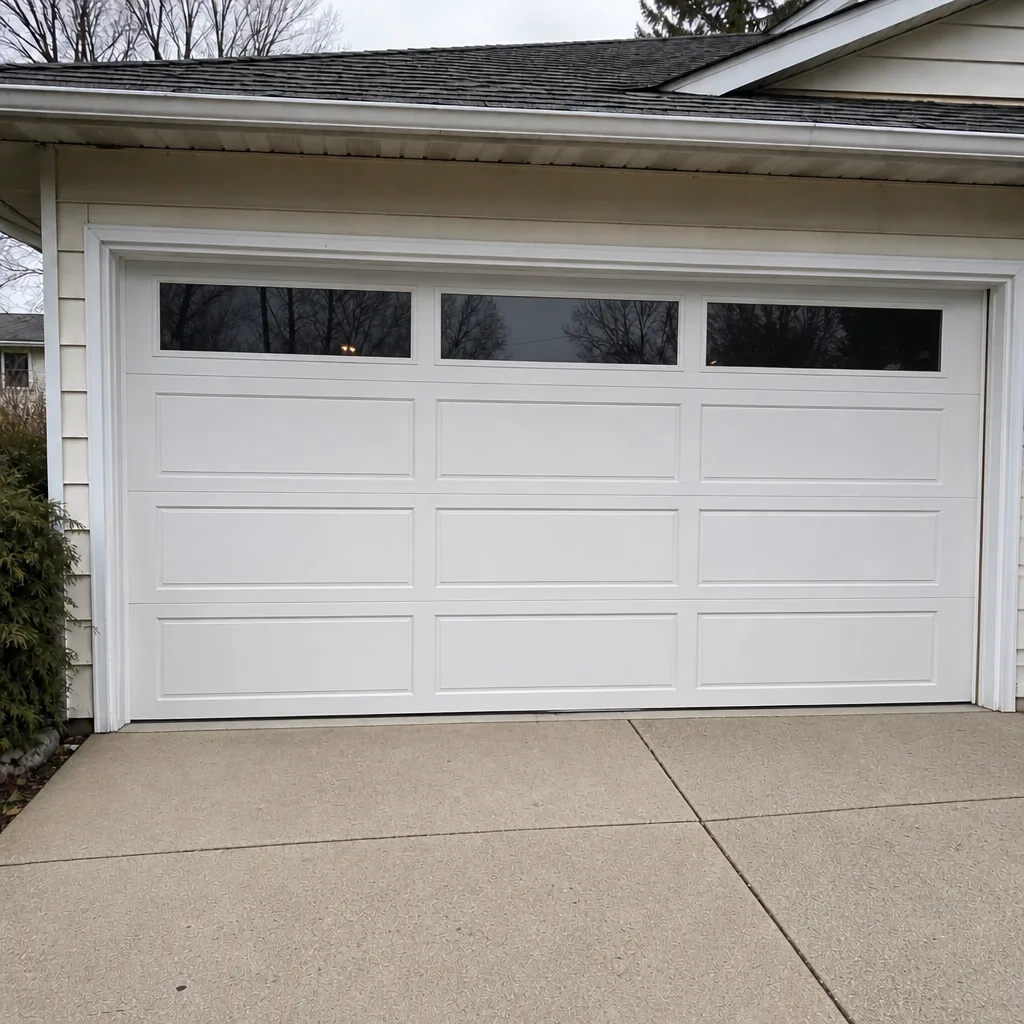
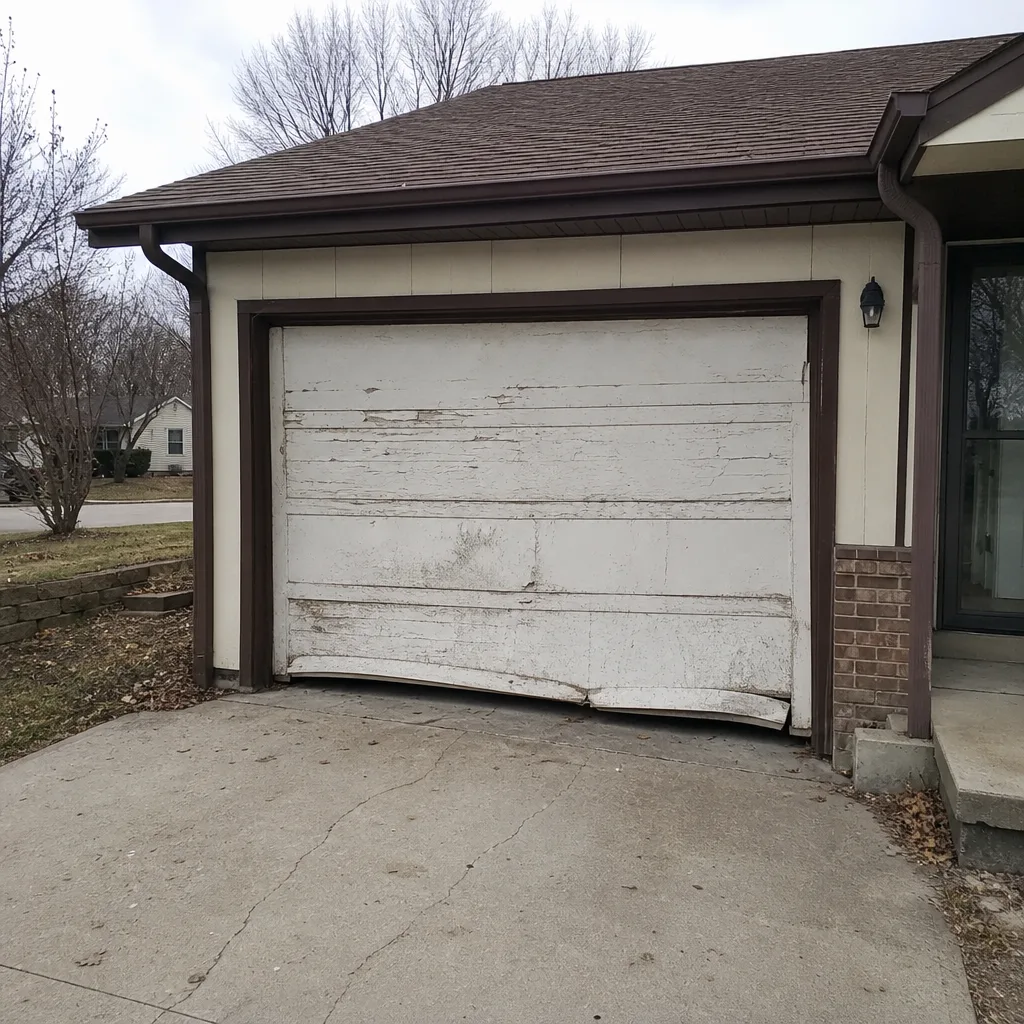
See the difference
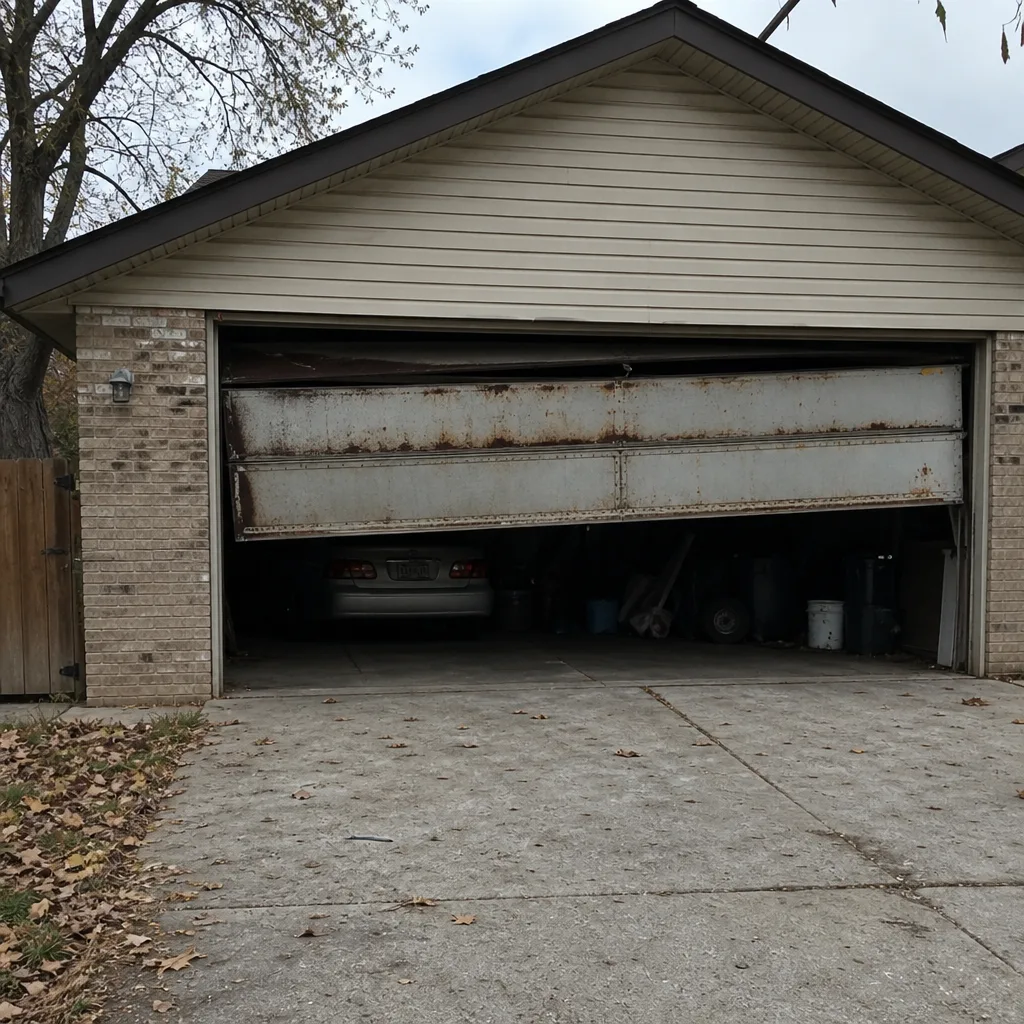 Before
 After
 Before
 After
 Before
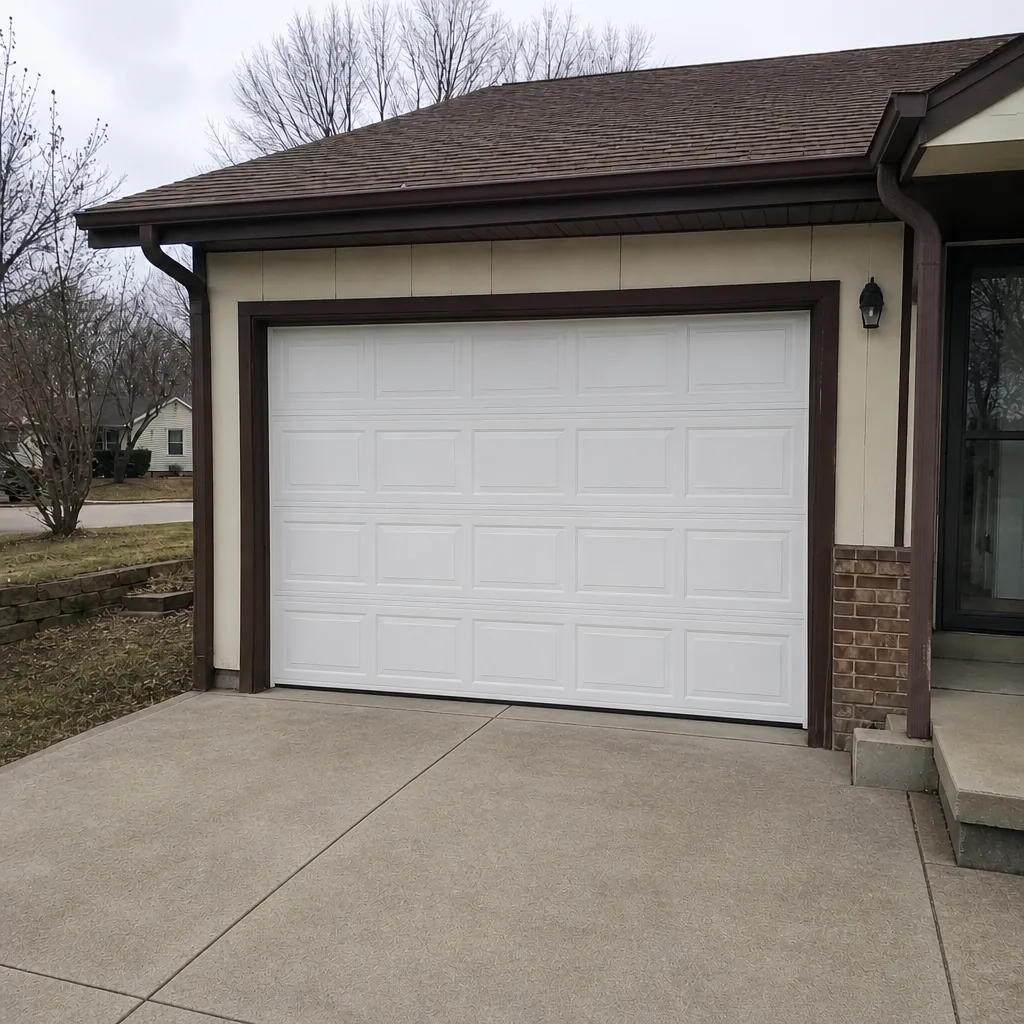 After
When to Call a Professional
Call a professional any time a spring or cable is involved, when the door has come off its track, when a panel is bent and the door could fall, or when a door won’t close and you can’t secure it. Those are the situations where a trained hand prevents an injury or a bigger repair. Also call if you’ve tried the obvious fixes and the door still misbehaves; a diagnosis from an experienced technician saves time and money.
If you’re already mid-emergency, call Bloomington Garage Door Repair Co. Bloomington Garage Door Repair Co offers free estimates in Bloomington. Call (833) 508-9255. We answer 24/7. Fast dispatch from 7am to 7pm, Sunday through Friday. Same-day service is available for urgent problems, and the price is quoted and agreed before any work starts.
Frequently Asked Questions
Pull the manual release handle straight down toward the floor, then lift the door with both hands. The handle is on a cord hanging from the opener rail, usually red or orange. Practice this once while the power is on so you’re not learning it in the dark. If you can’t find the handle or the door won’t lift, call (833) 508-9255. We answer 24/7.
Keep everyone clear of the door, don’t try to lift it by hand, and don’t run the opener. A broken spring in sub-zero cold means the door is unsupported, and forcing it can snap a cable or cause an injury. Call for a spring replacement and wait; a matched pair is the right fix. Call (833) 508-9255 for a free estimate.
Clear the doorway and check the photo-eye sensors first, since a knocked sensor is the most common cause. If the door is on its track, lower it by hand and brace it inside with a heavy clamp or a 2×4. If a spring or cable has failed, don’t force it; a technician should secure it. Call (833) 508-9255. We answer 24/7, and outside dispatch hours we book you into the next opening, Sunday through Friday, 7am to 7pm.
No. The price is set by the written estimate before any work starts, so the quote you agree to is the price you pay for the work described. If we find something else during the visit, we’ll tell you and re-quote before touching it. Call (833) 508-9255. Estimates are free.
The local professionals we connect you with are licensed and insured as their state requires. We match your job to an experienced, vetted garage door technician who works on the brand already in your garage. Call (833) 508-9255. We answer 24/7. Fast dispatch from 7am to 7pm, Sunday through Friday.
Yes, a trapped car is a priority call, and same-day service is available for urgent situations. Call (833) 508-9255 right away. We answer 24/7. Fast dispatch from 7am to 7pm, Sunday through Friday; a call outside dispatch hours is booked into the next opening. The price is quoted and agreed before any work starts.
The Bottom Line
A garage door emergency in Bloomington is rarely about one broken part. It’s about losing access, heat, and security all at once, usually in the cold and usually without a plan. The three things that matter most: know how to use your manual release, know when to stop and call a professional (springs, cables, off-track doors), and know who to call. Keep the number for Bloomington Garage Door Repair Co handy, and set aside an afternoon before the first freeze to lubricate, test the balance, and check the safety reverse. When the door won’t move, we move fast. Springs, openers, panels, full installations: one call covers all of it. The right fix, explained clearly, done once.
Written by the team at Bloomington Garage Door Repair Co.